
Few condiments manage to be as refreshing, versatile, and iconic as tzatziki. This creamy Greek yogurt and cucumber sauce is the cornerstone of Mediterranean flavor — cooling, tangy, and laced with garlic and herbs. Whether it’s served with grilled meats, tucked inside a pita wrap, or spooned over roasted vegetables, tzatziki brings brightness and balance to just about any dish.
In this post, I’ll tell you everything you need to know to get it just right!
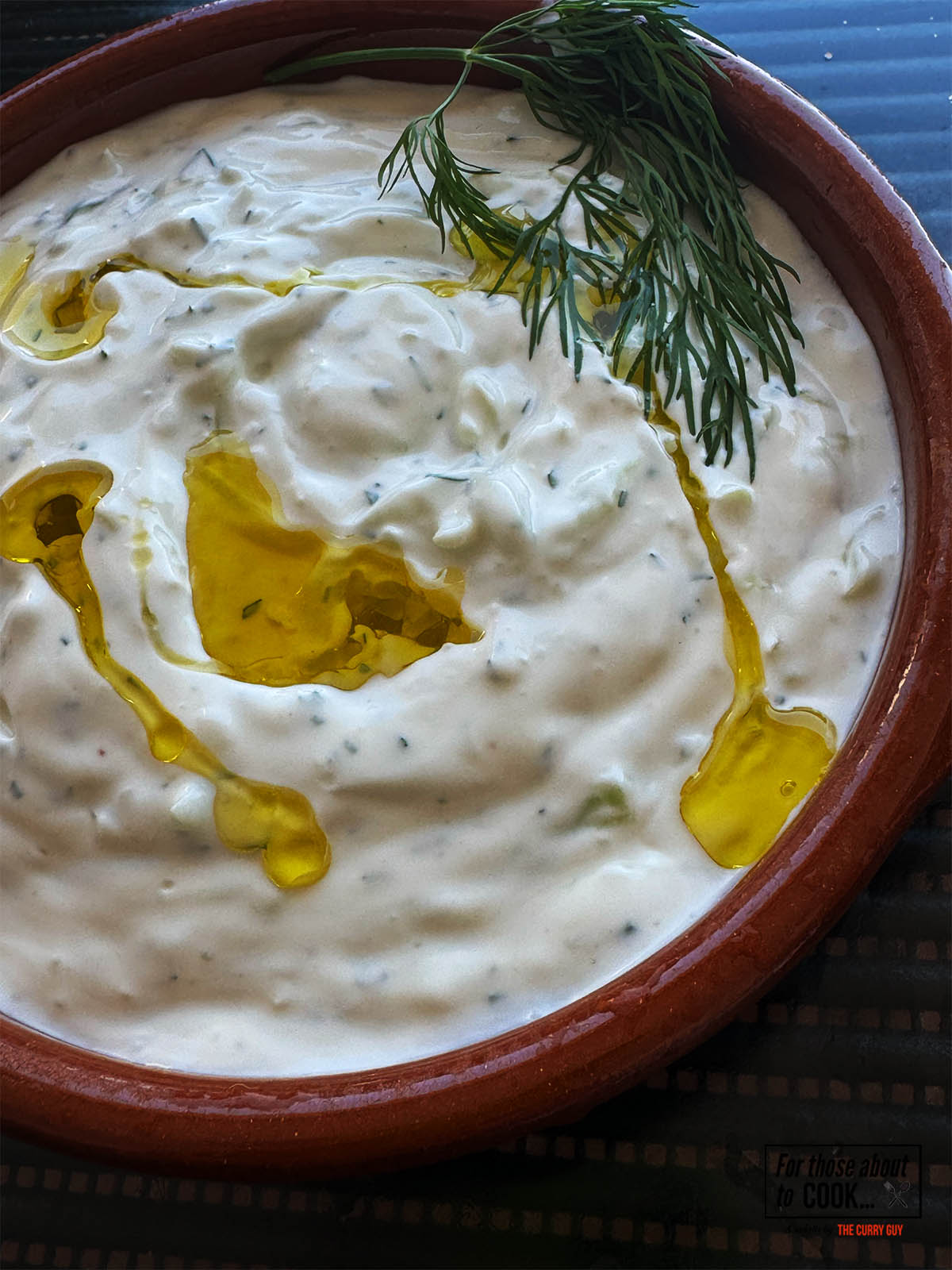
What Is Tzatziki?
Tzatziki (pronounced tsa-TSEE-kee) is a cold, creamy sauce made from strained yogurt, cucumber, garlic, olive oil, vinegar or lemon juice, and fresh herbs, typically dill or mint. It's a classic part of Greek cuisine, though versions of it appear throughout the eastern Mediterranean and the Middle East.
Tzatziki is traditionally served:
- As a dip with pita bread
- As a condiment for grilled meats like souvlaki, gyros, or kebabs
- As part of a mezze spread alongside hummus, olives, and dolmades
- With fried or roasted vegetables like zucchini, eggplant, or potatoes
It’s creamy yet light, tangy yet garlicky — a sauce that punches well above its weight in flavor.
Ingredients
There aren’t a lot of ingredients in a traditional tzatziki. Freshness and quality are key. The exact ingredient measurements I use are in the recipe card at the bottom of this page.
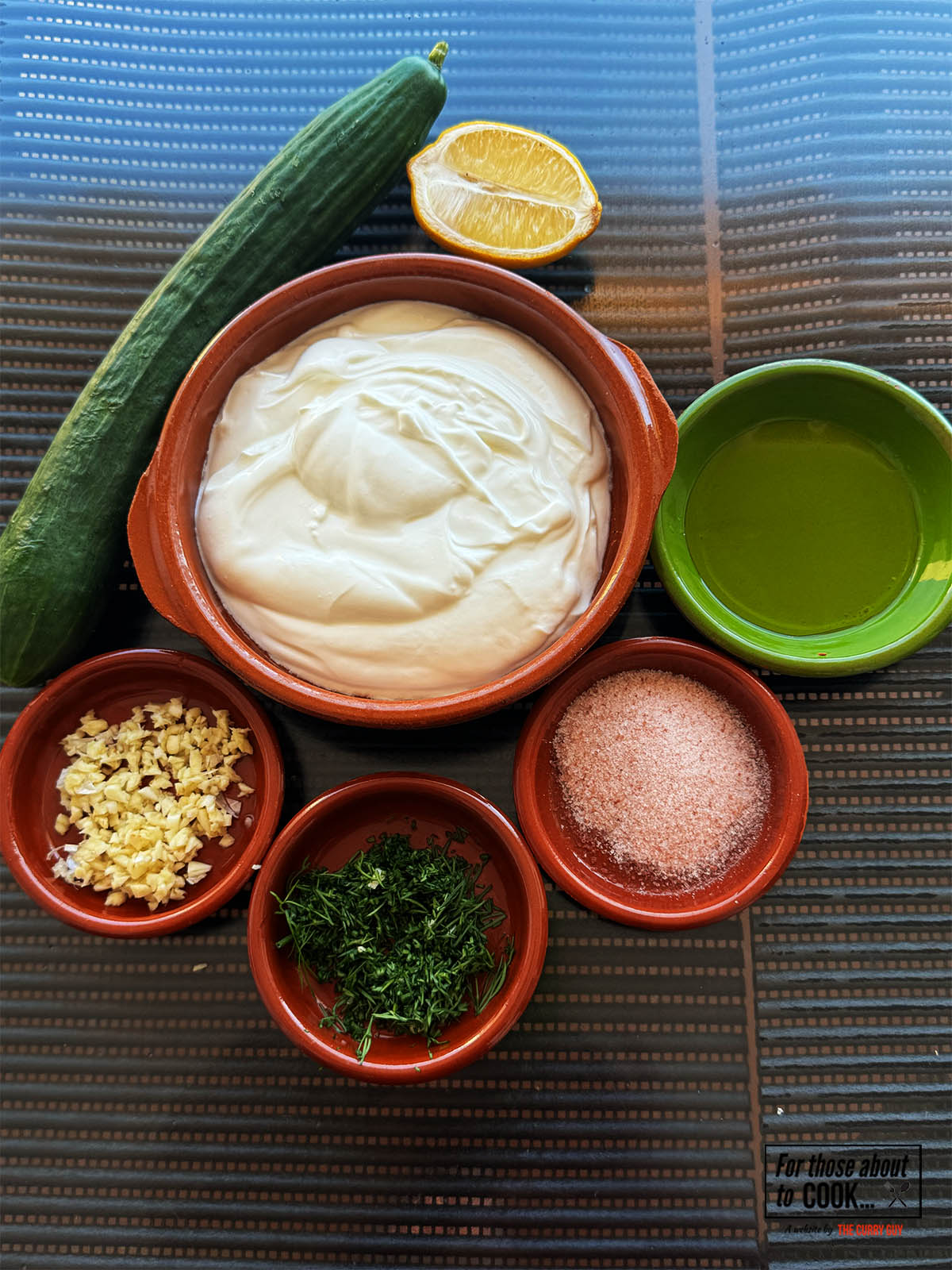
- English cucumber
- Greek yogurt
- Lemon juice
- Fresh dill
- Extra-virgin olive oil
- Garlic
- Salt
See recipe card for quantities.
Step by step photos.
You can whip up this authentic tzatziki in under 10 minutes. Check out my step by step photos to see just how easy it is.
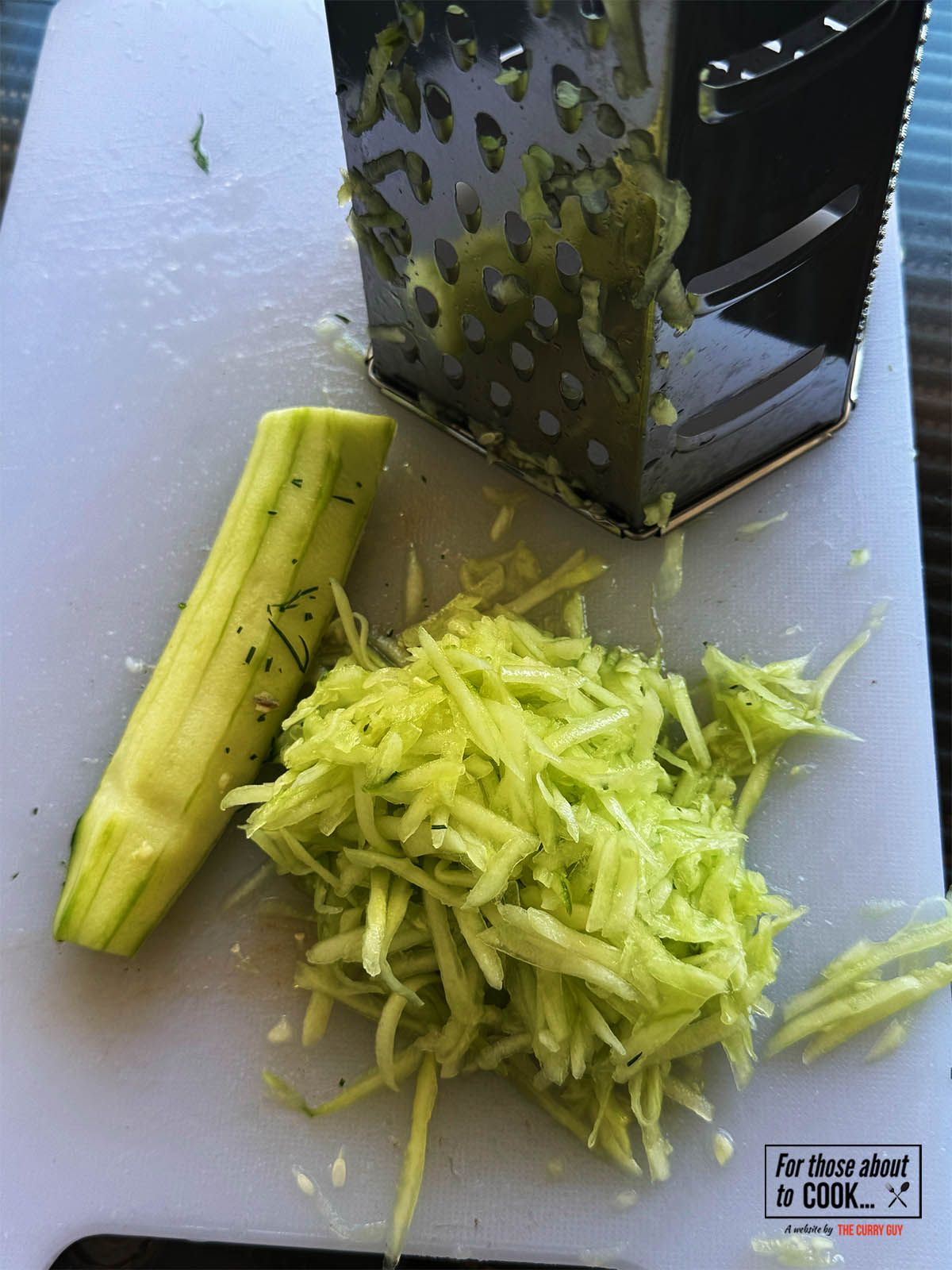
- Step 1: Peel the cucumber and then slice it down the center lengthwise. Remove the seed with a knife or spoon and then grate it.
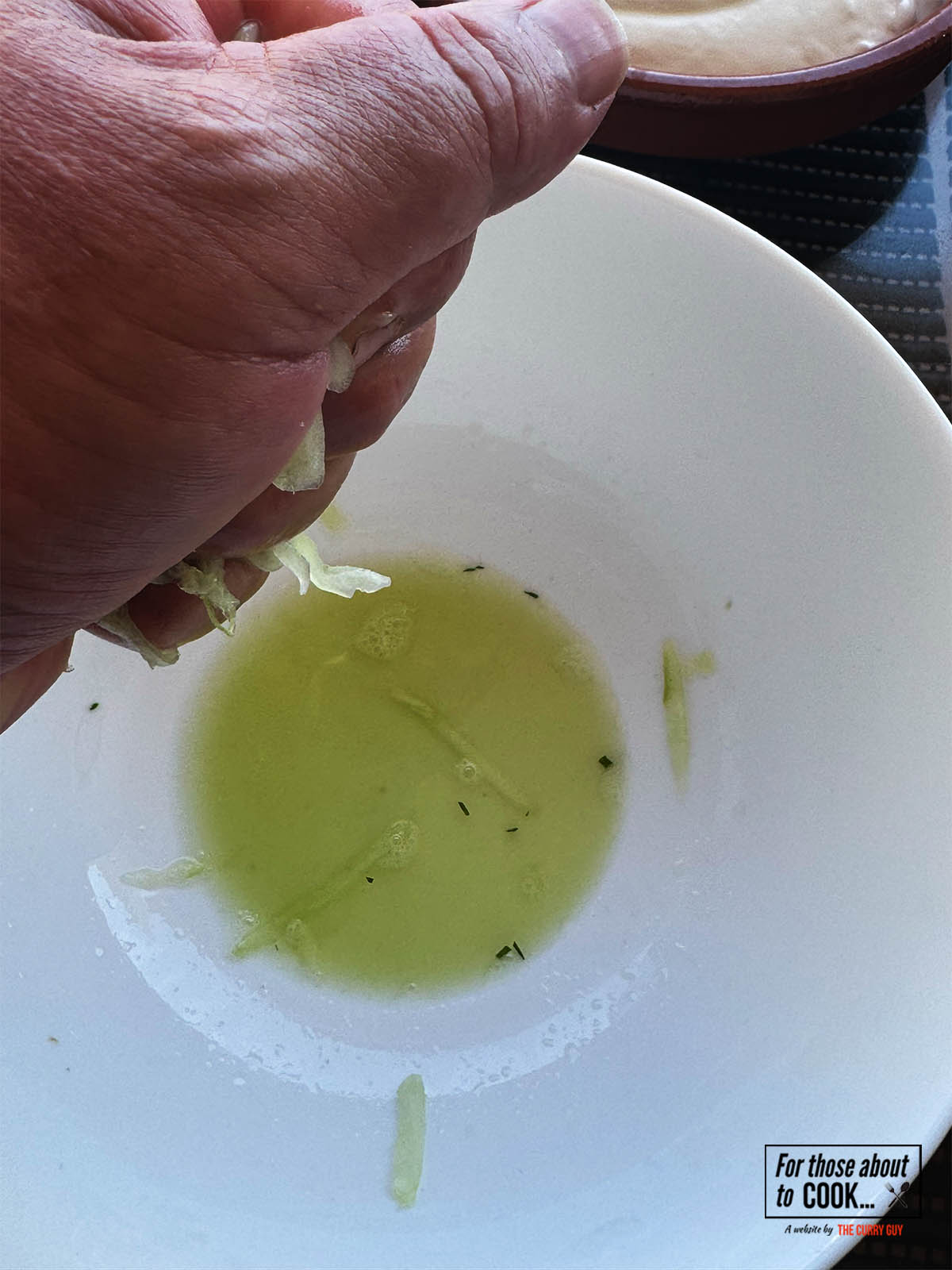
- Step 2: Squeeze the excess moisture from the grated cucumber into a bowl. You can discard any liquid you squeeze into the bowl.
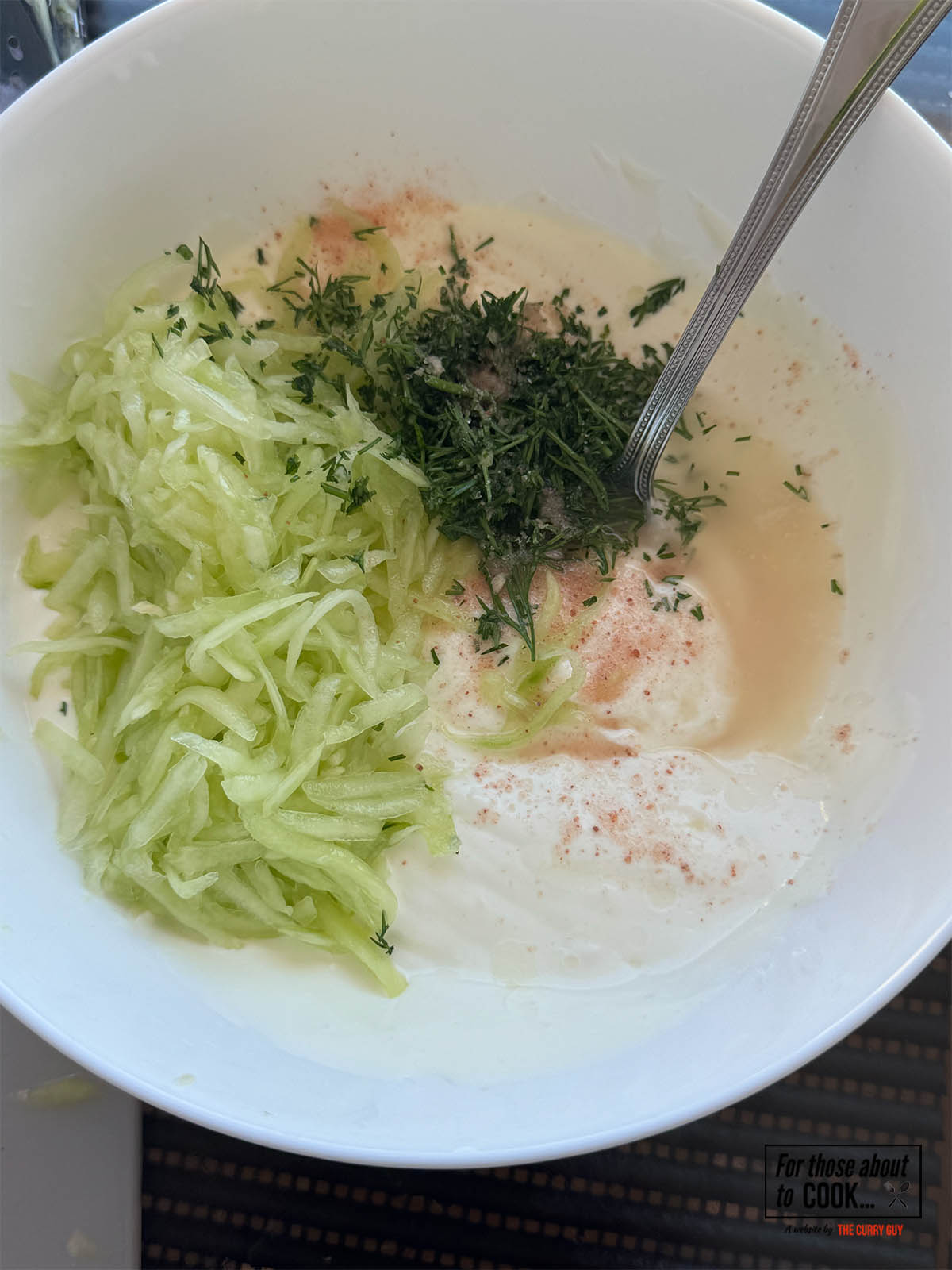
- Step 3: Put all of the ingredients for the tzatziki in a mixing bowl except for the olive oil.
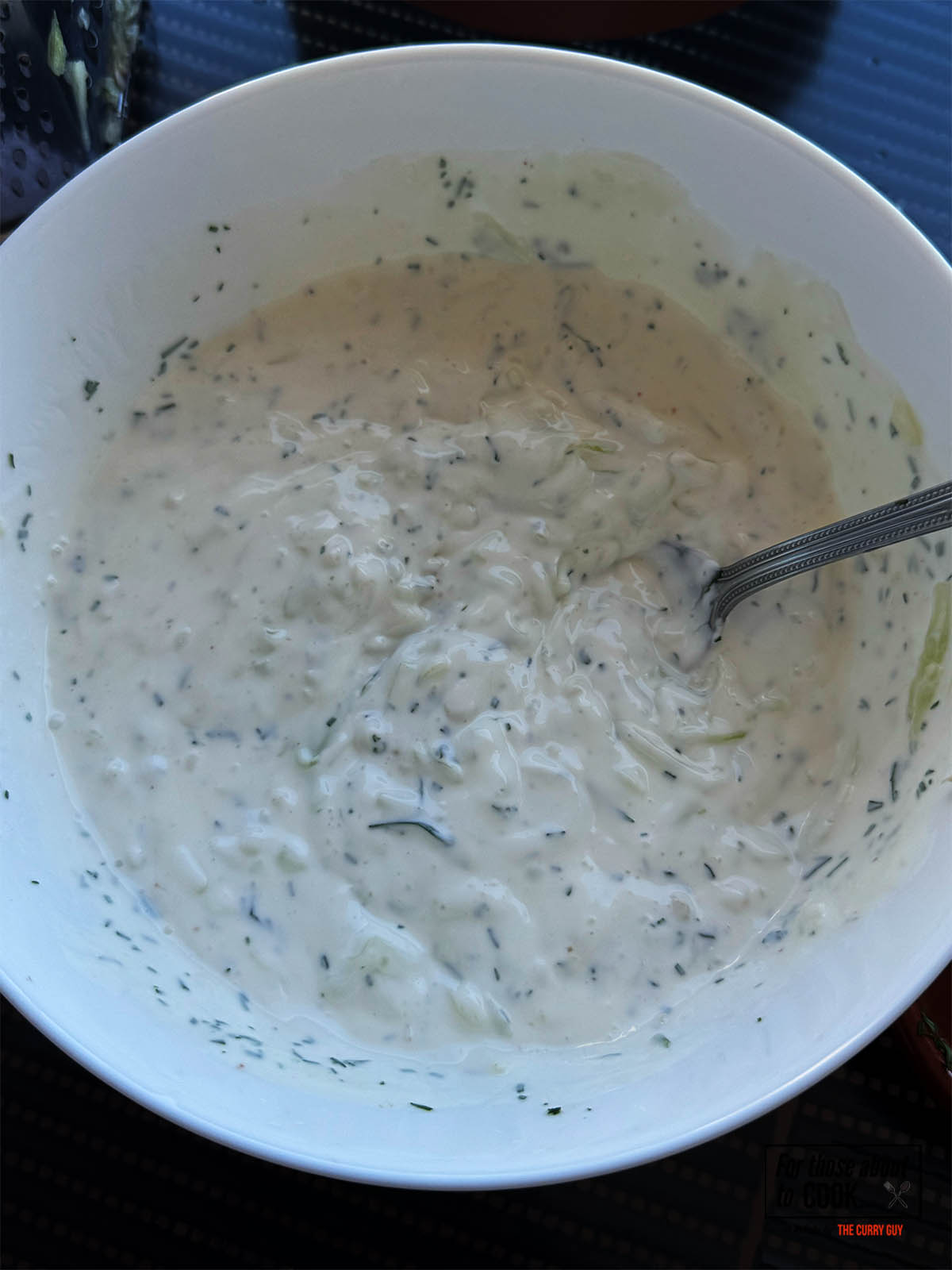
- Step 4: Whisk it well to combine until smooth.

- Step 3: Try it and add more salt or lemon juice if needed to taste. Then drizzle with good quality extra virgin olive oil to serve.
A Brief History of Tzatziki
Tzatziki has ancient roots that stretch back thousands of years. Its origin lies in the Ottoman Empire, and it shares similarities with other yogurt-based sauces and dips across the region, such as:
- Cacık (Turkey)
- Mast-o-khiar (Iran)
- Raita (India)
The Greek version as we know it today solidified in the 19th and 20th centuries, especially after yogurt became a culinary staple in modern Greek cuisine. The name “tzatziki” comes from the Turkish word cacık, but its preparation and identity are now uniquely Greek — especially when made with thick yogurt and served with lemony grilled meats.
Common Mistakes to Avoid
1. Using Unstrained Yogurt
Unstrained yogurt leads to runny tzatziki. If you don’t have Greek yogurt, strain your regular yogurt through cheesecloth in the fridge for 4–6 hours.
2. Not Draining the Cucumber
This is one of the biggest causes of watery tzatziki. Squeeze out as much moisture as possible after grating.
3. Overloading with Garlic
Tzatziki should be garlicky, but not overpowering. Raw garlic gets stronger over time, so if you're making it ahead, err on the side of caution.
4. Skipping the Chill Time
Letting tzatziki chill allows the flavors to meld. A minimum of 30 minutes makes a noticeable difference.
Variations on Tzatziki
Tzatziki is traditionally made with the ingredients listed above, but you can experiment with different herbs and flavorings while staying true to its spirit.
Herb Variations:
- Use mint instead of dill for a more refreshing, summery flavor.
- Try parsley or chives for a subtle twist.
Texture Tweaks:
- Blend the sauce in a food processor for a smooth, creamy texture.
- Leave it chunky if you prefer a rustic, homemade look.
Additions:
Crumbled feta for added richness and tang.
A pinch of ground cumin for a Middle Eastern edge.
A few chopped olives or capers for saltiness.
How to Store Tzatziki
Tzatziki should be stored in an airtight container in the fridge.
- Shelf life: Up to 3–4 days
- Freezing? Not recommended — the yogurt and cucumber separate when thawed, leading to a watery texture.
Tip: Give your tzatziki a quick stir before serving if it's been sitting — some natural separation is normal.
Top Tip
Don’t go crazy with the garlic. I have been tempted on occasion but tzatziki is usually served with other garlicky things so sometimes less is more.
Final Thoughts
Tzatziki is more than just a sauce — it’s a staple of Greek culture and Mediterranean hospitality. With just a few simple ingredients, you can whip up a dip that brings brightness, depth, and creaminess to any meal. Whether you’re hosting a summer BBQ, building a mezze platter, or just need something to dip your pita in at midnight, tzatziki has your back.
Make it once, and you’ll wonder how your fridge ever lived without it.
FAQ
Yes, you can use regular plain yogurt, but you'll need to strain it first to remove excess water. Greek yogurt is naturally thick due to straining, which gives tzatziki its signature creamy texture. To strain regular yogurt, place it in a cheesecloth-lined sieve over a bowl in the fridge for a few hours.
The two biggest culprits are unstrained cucumber and thin yogurt. To prevent watery tzatziki:
Grate the cucumber and squeeze out all the liquid using a clean kitchen towel or cheesecloth.
Use thick, full-fat Greek yogurt or strain regular yogurt.
Absolutely. In fact, it’s even better when made ahead. Letting tzatziki rest in the fridge for at least 30 minutes (or up to 24 hours) helps the flavors meld. Just stir it before serving if any liquid has separated.
Freezing tzatziki is not recommended. The yogurt and cucumber will separate when thawed, resulting in a watery, grainy texture. It's best enjoyed fresh.
Related
Looking for other recipes like this? Try these:




Pairing
These are my favorite dishes to serve with [this recipe]:




Recipe
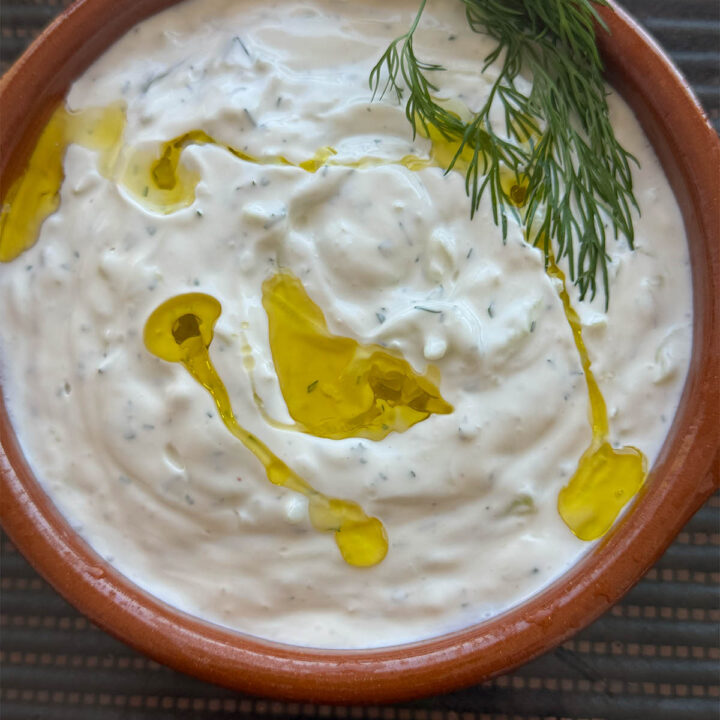
Tzatziki
This is a traditional, easy and delicious tzatziki. Serve it over souvlaki, gyros or simply with warm pitas or crispy veggies.
Ingredients
- 1 English cucumber
- 2 cups thick Greek yogurt
- 2 tablespoon lemon juice
- 2 tablespoon fresh dill
- 1 tablespoon extra-virgin olive oil
- 4 garlic cloves, minced
- Salt to taste
Instructions
- Peel the cucumber and then slice it down the center lengthwise. Remove the seed with a knife or spoon and then grate it.
- Squeeze the excess moisture from the grated cucumber into a bowl. You can discard any liquid you squeeze into the bowl.
- Put all of the ingredients for the tzatziki in a mixing bowl except for the olive oil. Whisk it well to combine until smooth.
- Try it and add more salt or lemon juice if needed to taste. Then drizzle with good quality extra virgin olive oil to serve.
Nutrition Information:
Yield: 6 Serving Size: 1Amount Per Serving: Calories: 73Total Fat: 3gSaturated Fat: 0gTrans Fat: 0gUnsaturated Fat: 2gCholesterol: 4mgSodium: 126mgCarbohydrates: 5gFiber: 0gSugar: 3gProtein: 8g