
Paella Valenciana is one of the most misunderstood and misrepresented dishes in global cuisine. While countless variations of "paella" exist worldwide, often overloaded with seafood, chorizo, or even pineapple (yes, really) — the original, traditional Valencian paella (Paella Valenciana) is something much simpler, yet deeply rooted in history, culture, and regional pride.
In this post, we’ll take you through the history of Valencian paella, its authentic ingredients, the step-by-step cooking process, and offer expert tips, recommended equipment, and storage advice. If you want to make a real Valencian paella at home — the way it’s done in its birthplace — this is your definitive guide
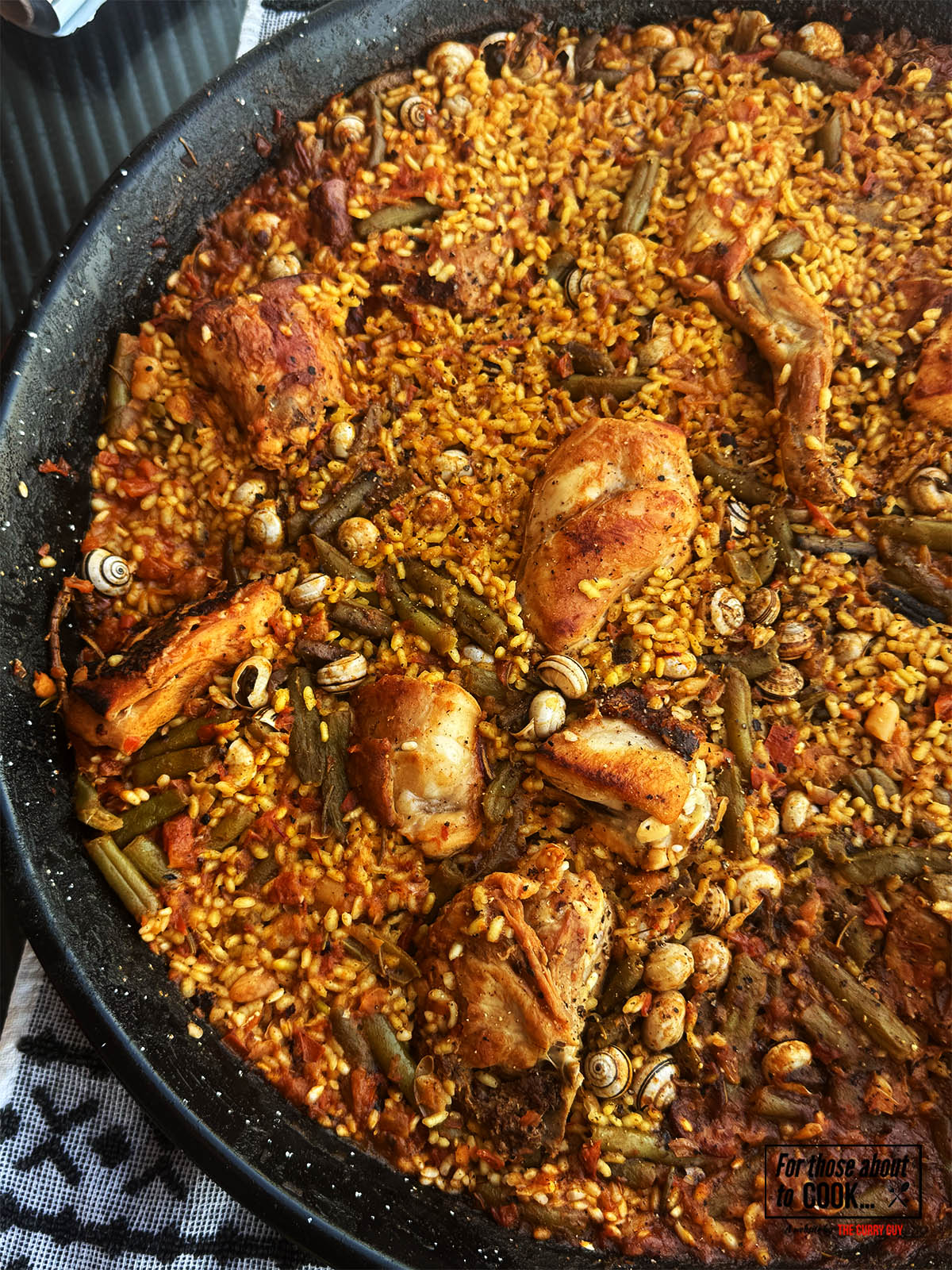
A Brief History of Paella Valenciana
Paella was born in the countryside of Valencia, on Spain’s eastern Mediterranean coast. In the 18th and 19th centuries, local farmers and day laborers would cook rice in a wide pan over an open fire, using what they had on hand — typically rabbit, chicken, snails, and local vegetables like green beans and butter beans (garrofón). It was a communal dish, meant to feed a group, often cooked outdoors in orchards or fields.
Unlike the seafood-packed “paella marinera” served in tourist hotspots, paella Valenciana is a land-based dish, representing the bounty of the Huerta Valenciana — the fertile farmland around the city. It’s about balance, restraint, and letting each ingredient shine in harmony with the rice.
In 2012, the local government in Valencia even defined an official recipe for paella Valenciana, which includes 10 core ingredients and excludes anything not traditionally used (sorry, chorizo).
The Key Ingredients in Traditional Paella Valenciana
To make a true Valencian paella, you need specific ingredients. While some substitutes are acceptable, sticking to the classics ensures authenticity.
1. Rice
- Type: Use a short-grain Spanish variety like Bomba or Calasparra. These absorb liquid without becoming mushy.
- Why it matters: The rice is the star of the dish, not just a filler.
2. Meat
- Rabbit and chicken are the traditional proteins. Some versions include snails (cargols), though they’re optional if not to your taste.
- Use bone-in cuts for flavor.
3. Vegetables
- Green beans (judía verde) — flat Romano-style green beans are ideal.
- Butter beans (garrofón) — large white beans unique to the region. If you can’t find them, use lima beans or fava beans as a substitute.
4. Tomato
- Used to make the sofrito (base). Use fresh grated tomato or high-quality canned tomatoes.
5. Olive Oil
- Use Spanish extra virgin olive oil for sautéing and flavor.
6. Paprika and Saffron
- Sweet smoked paprika (pimentón dulce) adds depth.
- Saffron gives the paella its signature golden hue and aroma.
7. Water and Salt
- Surprisingly, traditional paella uses water, not stock. The flavor comes from the meat and vegetables themselves.
Ingredients
Below you will see the ingredients I use to make my Paella Valenciana. You will find the exact ingredient measurements in the recipe card at the bottom of this page. Get everything ready and prepared before you start cooking.
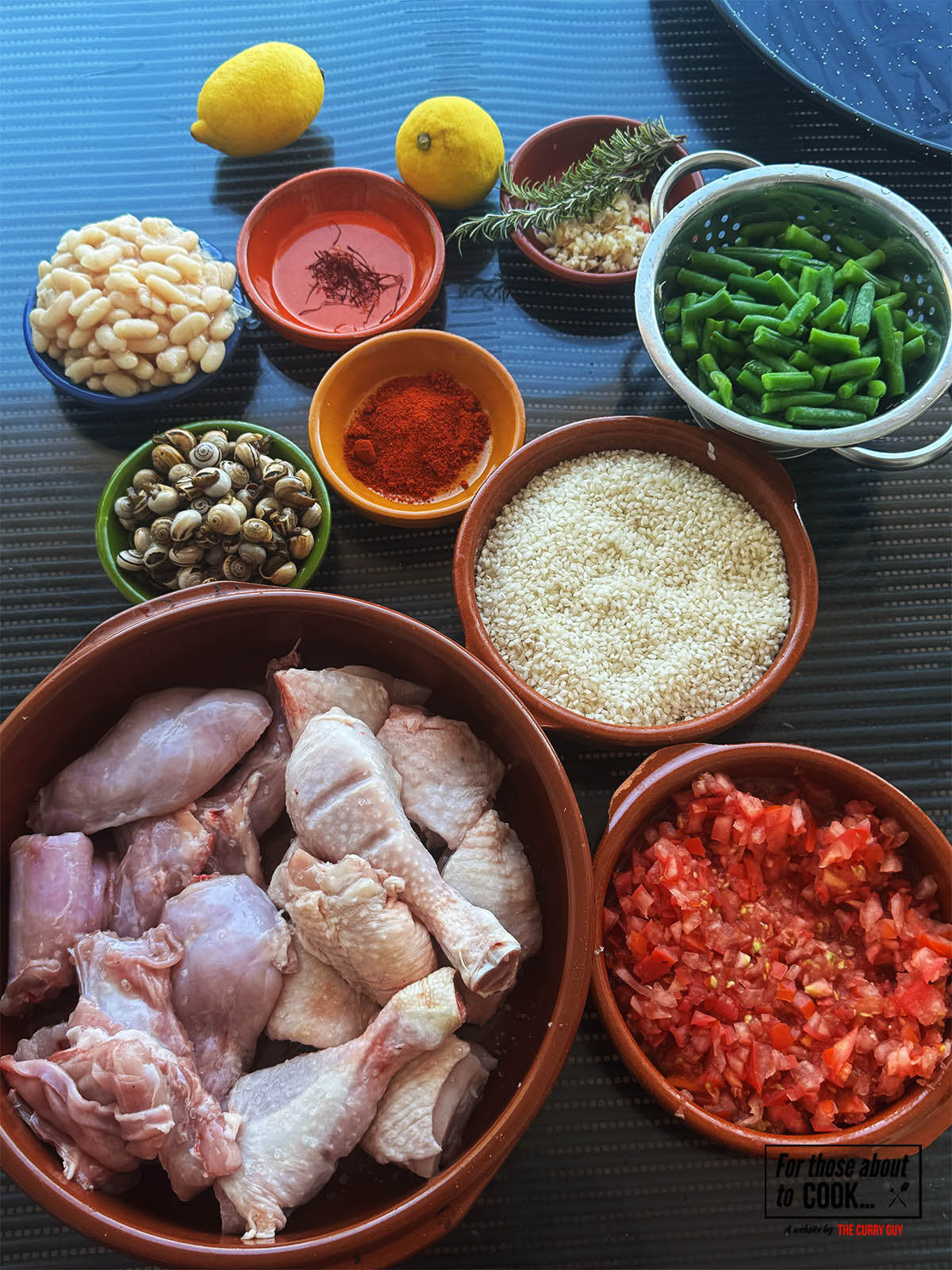
- Extra virgin olive oil
- Bone-in chicken pieces (thighs or drumsticks)
- Rabbit, (or more chicken if unavailable)
- Green beans
- Lima or butter beans
- Tomatoes, grated
- Garlic
- Sweet paprika
- Saffron (soaked in warm water)
- Water
- Salt to taste
- Bomba or Calasparra rice
- Optional: a sprig of fresh rosemary
- Optional: land snails, cleaned
See recipe card for quantities.
Instructions
Check out my step by step photos. You can use these to help cook your Valencian Paella to perfection. The full written recipe is in the recipe card at the bottom of the page.
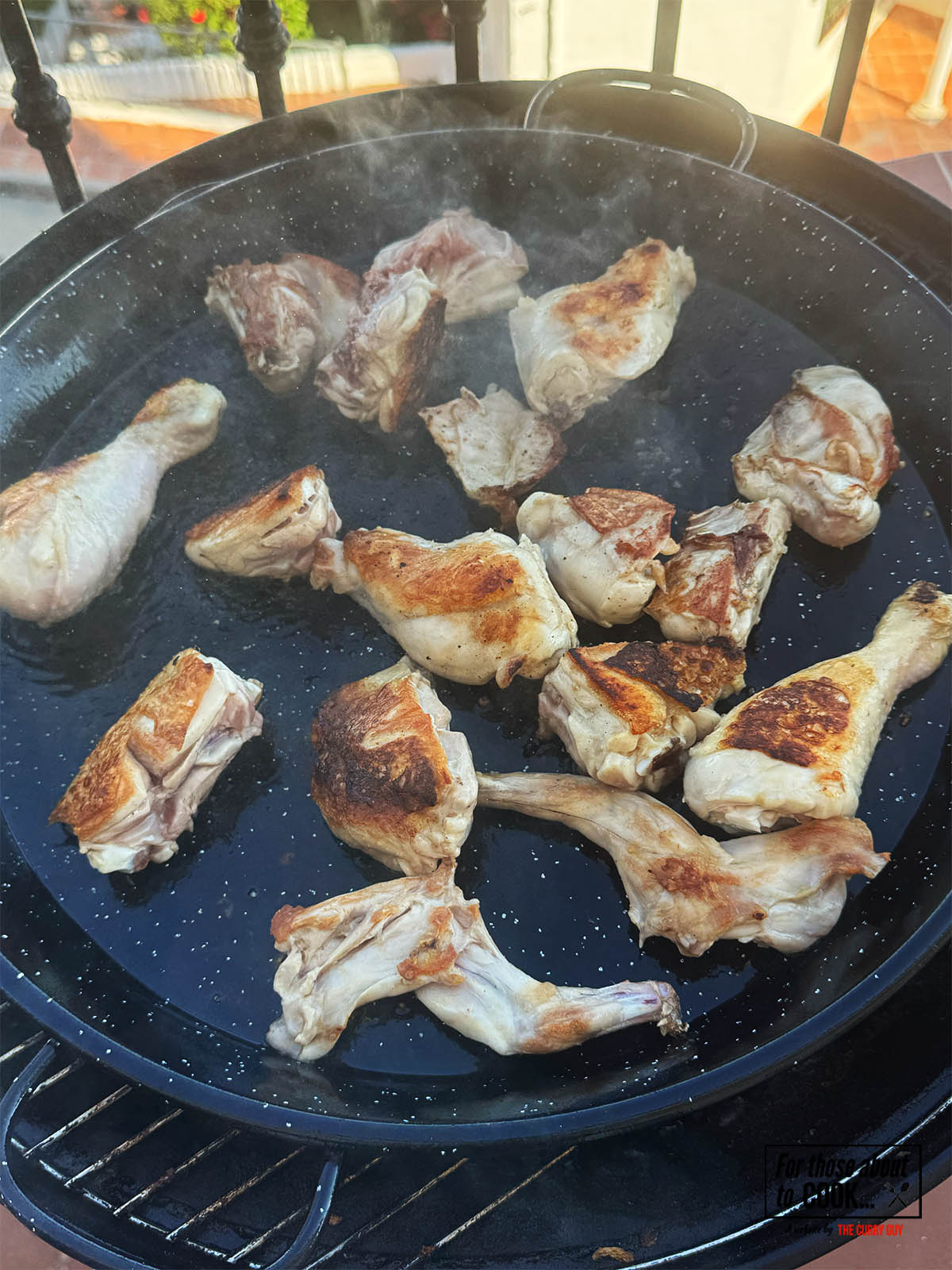
- Step 1: Heat the olive oil in your paella pan over medium-high heat. When hot, add the chicken and rabbit pieces, seasoned with salt. Sear until golden on all sides. This can take 10–15 minutes. Browning the meat is essential for developing deep flavor.
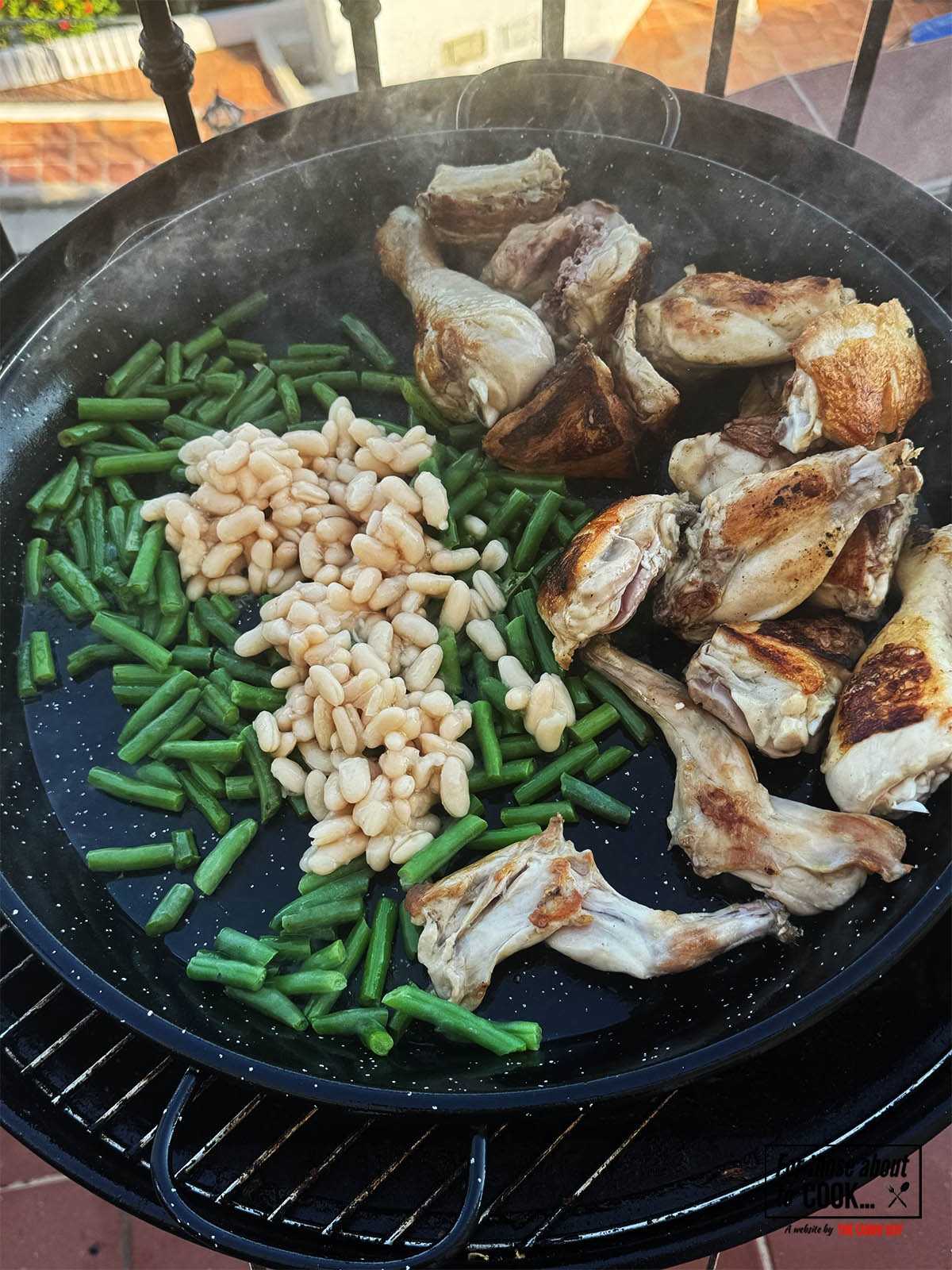
- Step 2: Add the green beans and fava or butter beans to the pan. Sauté for a few minutes until they soften slightly and take on some color.
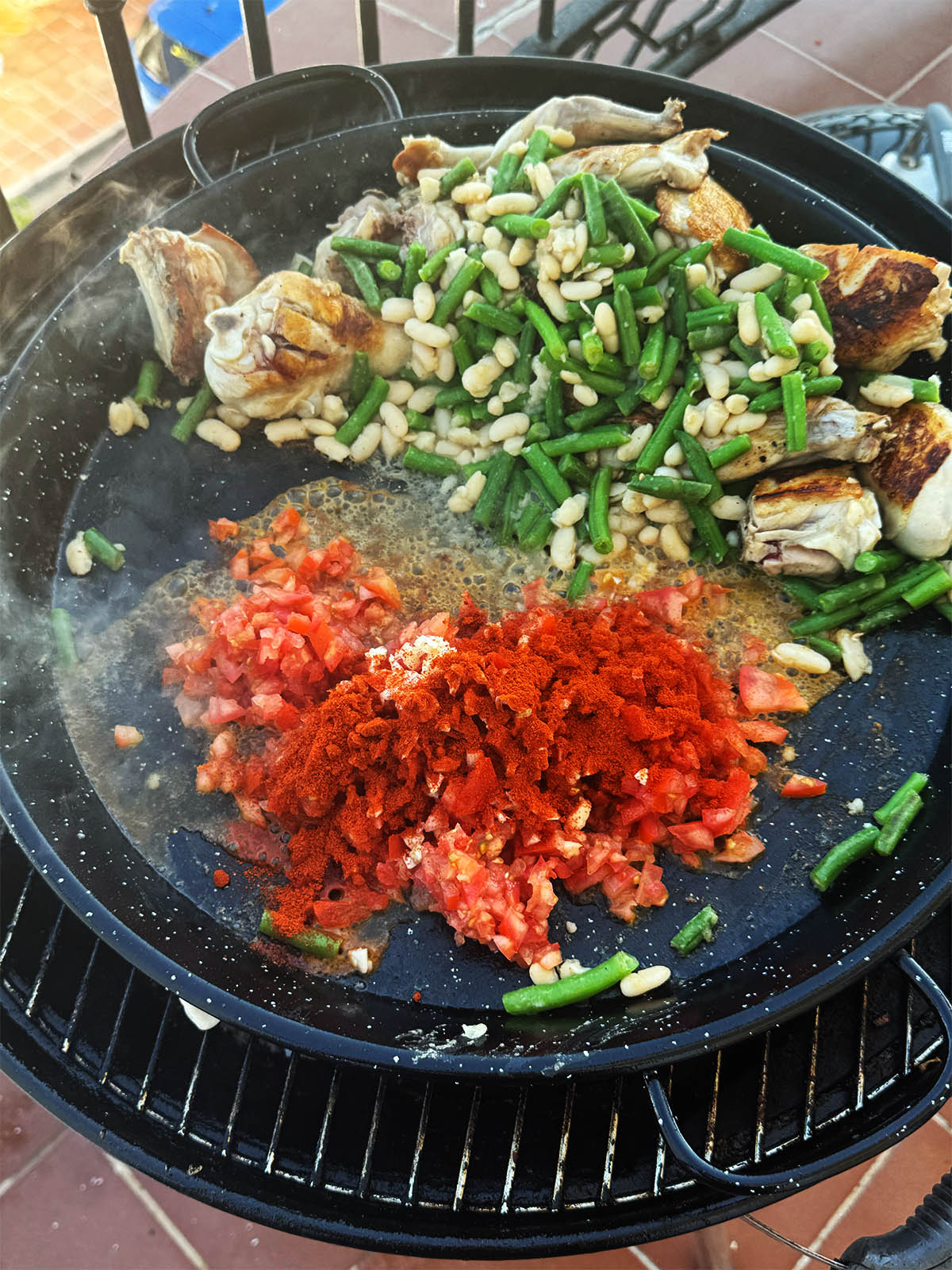
- Step 3: Push the meat and vegetables to the sides of the pan. Add the grated tomato, garlic and paprika to the center. Let it cook down for 5 minutes, stirring occasionally to create a rich, thick base.
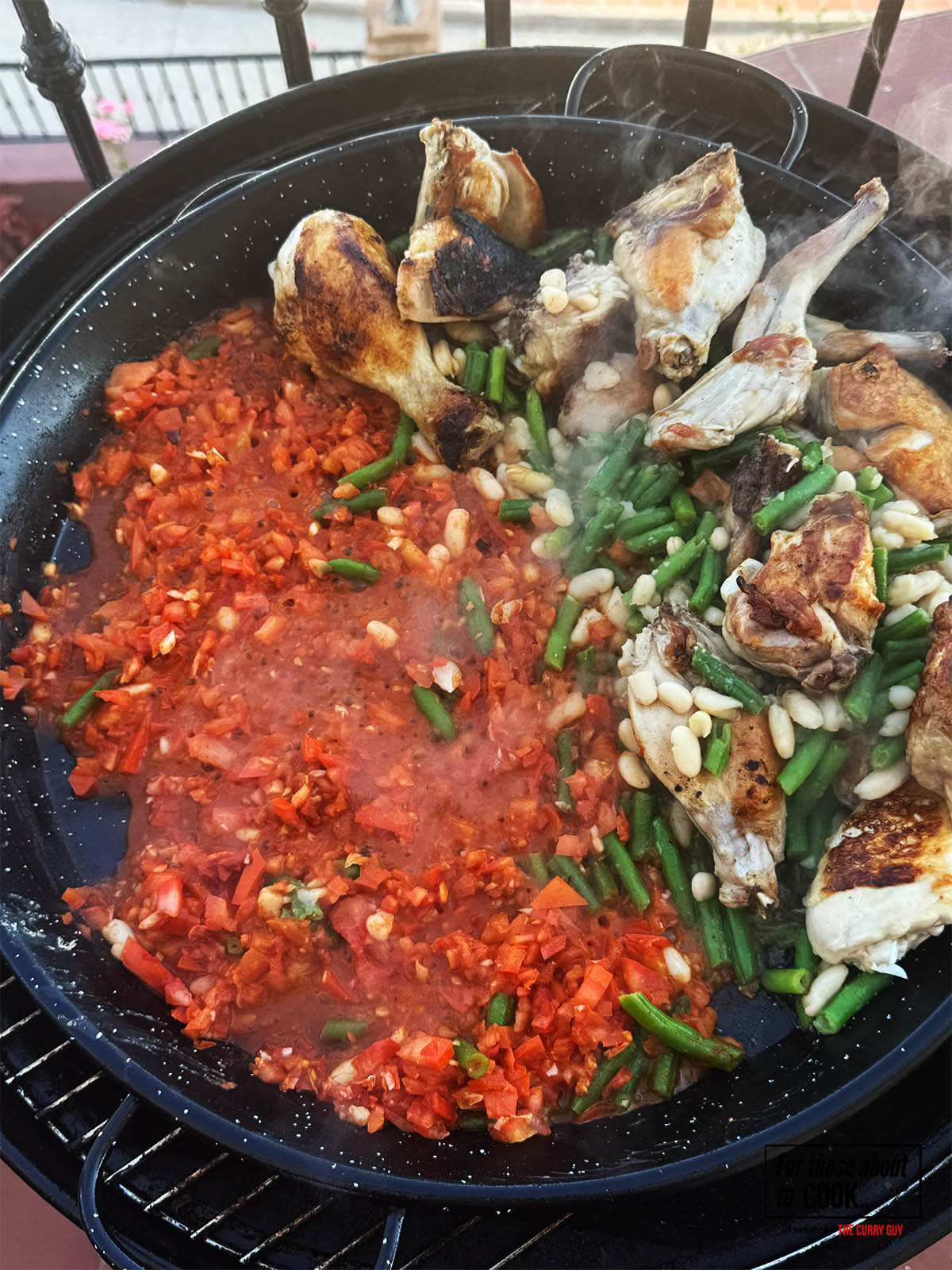
- Step 4: Pour in enough water to cover all the ingredients — about 1.5 liters. Bring to a boil. Simmer for 30–40 minutes, allowing the meat to fully cook and the broth to develop flavor. Top up with more water if needed.
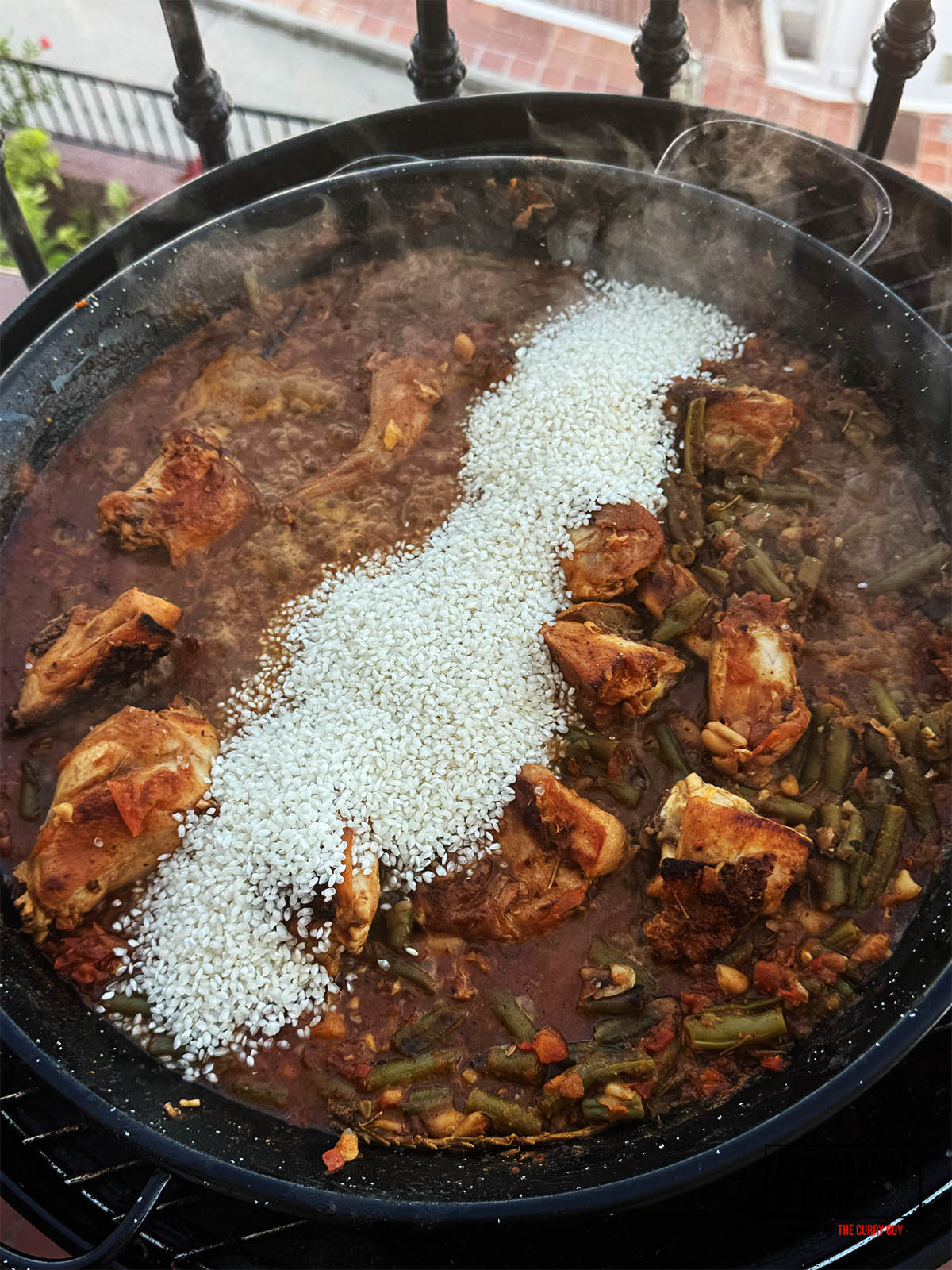
- Step 5: Taste the broth for salt. It should be slightly salty as the rice will absorb it. Add the soaked saffron and any remaining soaking liquid. Then, add the rice in a straight line across the diameter of the pan and spread it evenly without stirring.

- Step 6: Let it cook on a medium-high boil for the first 8 minutes, then reduce to a medium simmer for another 10 minutes. Rotate the pan if necessary to ensure even cooking.
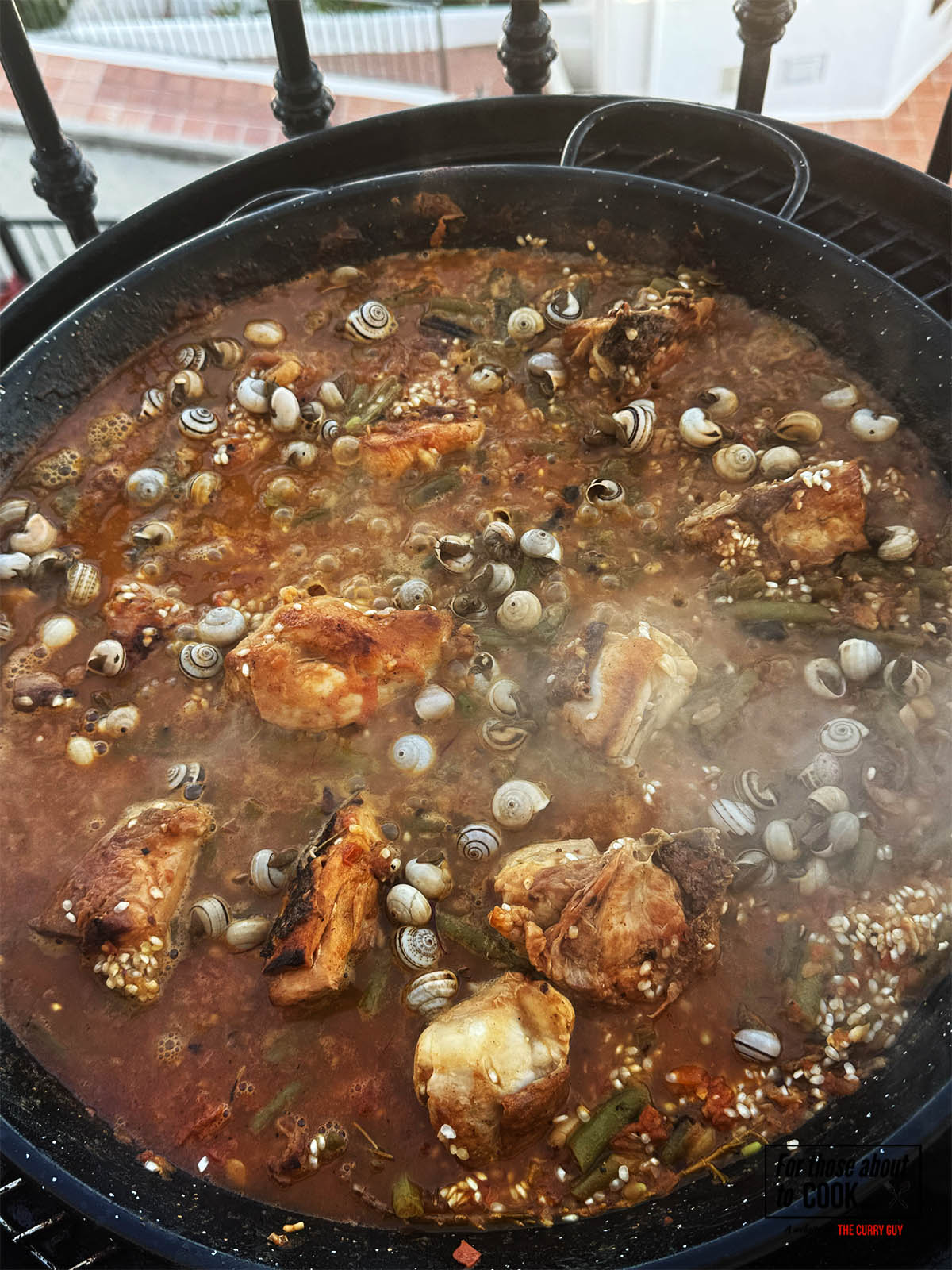
- Step 7: After about 18–20 minutes, the liquid should be absorbed. Just before it is, stir in the snails if using. Increase the heat for the final 1–2 minutes to form the socarrat— the crunchy layer at the bottom. You’ll hear it crackle. Don’t stir!
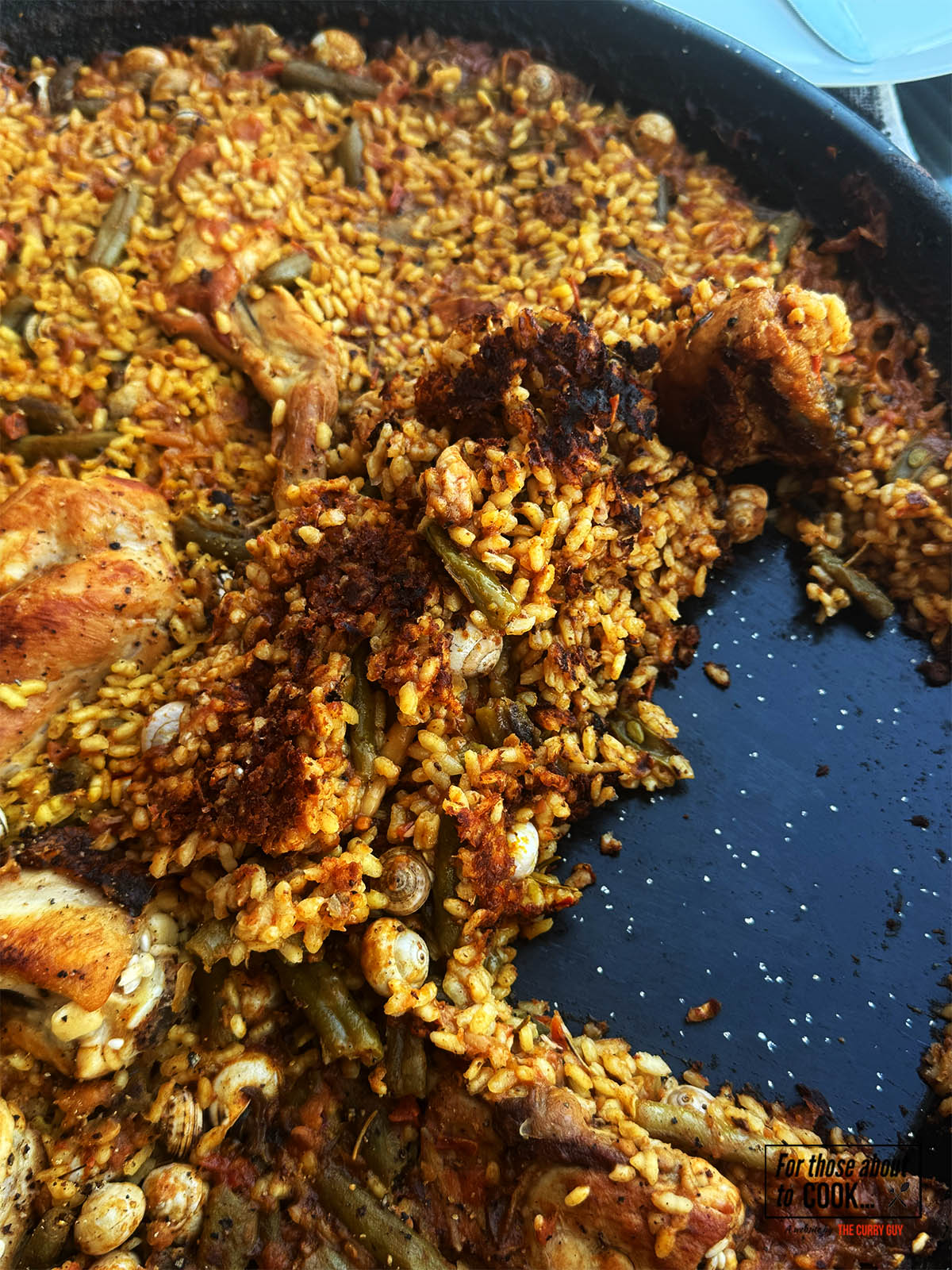
- Step 8: Remove from heat. Cover the pan with a clean dish towel or foil and rest for 5–10 minutes before serving. This step is crucial for settling the rice and enhancing flavor. The socarrat will continue to form as it rests. That is the browned base you can see when scraped off the bottom.
What’s NOT Authentic Paella Valenciana
Let’s clear up a few myths:
- No seafood — that’s a different dish (paella de mariscos).
- No chorizo — this British addition is considered blasphemy in Valencia.
- No peas, onions, or bell peppers — they are not traditional in paella Valenciana.
No stirring after the rice is added — repeat after me!
What’s NOT Authentic in Valencian Paella
Let’s clear up a few myths:
- No seafood — that’s a different dish (paella de mariscos).
- No chorizo — this British addition is considered blasphemy in Valencia.
- No peas, onions, or bell peppers — they are not traditional in paella Valenciana.
- No stirring after the rice is added — repeat after me!
Essential Equipment
A paella pan, or paellera, is essential for cooking Valencian paella properly. Its wide, shallow design ensures:
- Even rice cooking
- Efficient evaporation of liquid
- Formation of the prized socarrat — the crispy bottom crust
Choose a pan sized for the number of servings. A 38–40 cm pan is perfect for 4–6 people.
Heat Source Options:
Stovetop (use your largest burner and rotate the pan if needed).
Gas burner or paella burner for even heat.
Charcoal or wood fire for traditional flavor and ambiance.
Storing and Reheating Leftovers
Storage
- Fridge: Transfer leftovers to an airtight container. Store for up to 3 days.
- Freezer: You can freeze paella, though the rice texture will soften slightly. Store for up to 2 months.
Reheating
Oven: Reheat at 180°C (350°F) covered for 10–15 minutes.
Best method: Heat a nonstick skillet with a touch of olive oil and fry the rice to restore some crispness.
Microwave: Add a tablespoon of water, cover loosely, and microwave until hot.
Top Tip
Cook over fire for smoky authenticity if possible — orange or olive wood is traditional but you can use any aged wood or charcoal.
Final Thoughts
Authentic paella Valenciana is a dish steeped in history, culture, and regional pride. It’s not just a recipe — it’s a ritual that brings people together. When made properly, each spoonful delivers a symphony of flavor: tender meat, slightly firm rice, aromatic saffron, and the caramelized crunch of socarrat.
Once you’ve tried making it the real way, you’ll understand why Valencians guard this dish so closely. It’s not just food — it’s heritage in a pan.
FAQ
No, but you will find it easier and you will get more authentic results if you do. If you love paella, consider purchasing a paella pan. If you must, you can use a wide, flat not stick pan to make this paella.
Related
Looking for other recipes like this? Try these:

Pairing
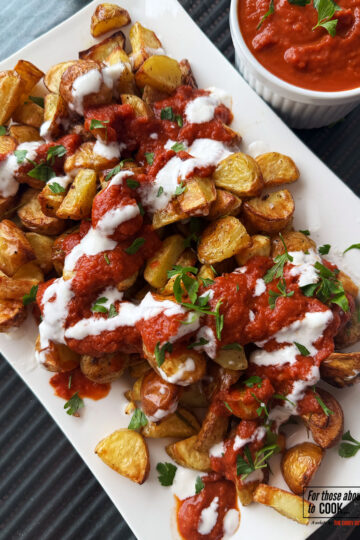
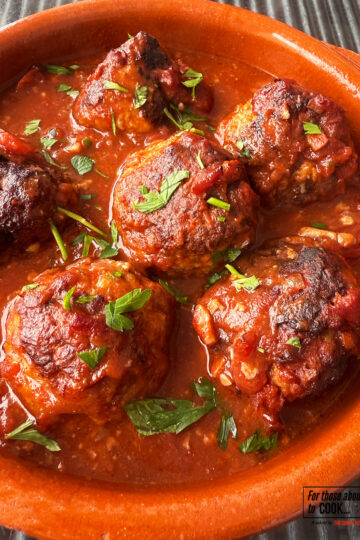
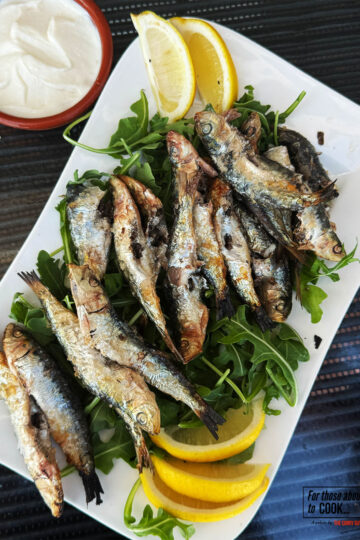
These are my favorite dishes to serve with Paella Valenciana:
Recipe
Valencian Paella
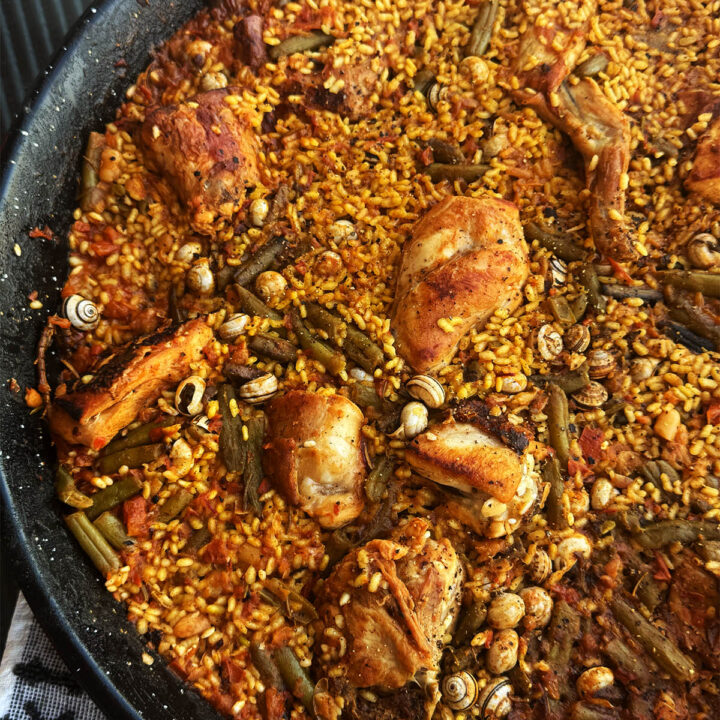
This is an authentic Valencian Paella. It might be like no paella you have tried before and I think you are going to love it! Give it a try soon.
Ingredients
- 400g (2 cups) Bomba or Calasparra rice
- 500g bone-in chicken pieces (thighs or drumsticks)
- 400g rabbit, chopped (or more chicken if unavailable)
- 150g flat green beans (Romano or runner beans), chopped
- 100g garrofón (or frozen lima/fava beans)
- 2 medium ripe tomatoes, grated (or 200g canned crushed tomato)
- 1 teaspoon sweet paprika
- A few strands of saffron (soaked in warm water)
- 100ml extra virgin olive oil
- 1.2–1.5 liters of water
- Salt to taste
- Optional: a sprig of fresh rosemary for the final 5 minutes
- Optional: 6–8 land snails, cleaned
Instructions
- Heat the olive oil in your paella pan over medium-high heat. When hot, add the chicken and rabbit pieces, seasoned with salt. Sear until golden on all sides. This can take 10–15 minutes. Browning the meat is essential for developing deep flavor.
- Add the green beans and fava or butter beans to the pan. Sauté for a few minutes until they soften slightly and take on some color.
- Push the meat and vegetables to the sides of the pan. Add the grated tomato and paprika to the center. Let it cook down for 5 minutes, stirring occasionally to create a rich, thick base.
- Pour in enough water to cover all the ingredients — about 1.5 liters. Bring to a boil. Simmer for 30–40 minutes, allowing the meat to fully cook and the broth to develop flavor. Top up with more water if needed.
- Taste the broth for salt. It should be slightly salty as the rice will absorb it. Add the soaked saffron and any remaining soaking liquid. Then, add the rice in a straight line across the diameter of the pan and spread it evenly without stirring.
- Let it cook on a medium-high boil for the first 8 minutes, then reduce to a medium simmer for another 10 minutes. Rotate the pan if necessary to ensure even cooking.
- After about 18–20 minutes, the liquid should be absorbed. Increase the heat for the final 1–2 minutes to form the socarrat— the crunchy layer at the bottom. You’ll hear it crackle. Don’t stir!
- Remove from heat. Cover the pan with a clean dish towel or foil and rest for 5–10 minutes before serving. This step is crucial for settling the rice and enhancing flavor.
Nutrition Information:
Yield: 6 Serving Size: 1Amount Per Serving: Calories: 1354Total Fat: 42gSaturated Fat: 9gTrans Fat: 0gUnsaturated Fat: 25gCholesterol: 636mgSodium: 881mgCarbohydrates: 31gFiber: 2gSugar: 2gProtein: 199g