For Those About To Cook

  • Home
  • About Us
  • All Recipes
  • Subscribe
menu icon
go to homepage
  • Home
  • About Us
  • All Recipes
  • Subscribe
    • Facebook
    • Instagram
    • Pinterest
  • search icon
    Homepage link
    • Home
    • About Us
    • All Recipes
    • Subscribe
    • Facebook
    • Instagram
    • Pinterest
  • ×
    Home

    Gnocchi With Brown Butter And Sage

    April 14, 2025 By Shannon

    gnocchi with brown butter and sage

    This Gnocchi with brown butter and sage recipe is the ultimate comfort food. Nutty butter with crispy sage is so simple to prepare yet it feels like something special. Perfect for a cozy night in or impressing friends and family. You could even make your own gnocchi to elevate this dish even further.

    gnocchi with brown butter and sage

    About this Gnocchi with brown butter and sage recipe

    This is a classic Italian dish and takes only a handful of ingredients. The trick is to fry the gnocchi perfectly so that each Gnocchi has a crisp exterior with a soft, pillowy inside. I show you how to do this right here.

    The sauce is made up of butter, browned over a medium heat and later infused with crispy sage leaves and garlic. You cannot beat the result of this recipe and it is so simple to prepare. Proof that simple food can be the most satisfying.

    [feast_advanced_jump_to]

    Ingredients

    This recipe only takes a handful of ingredients which are easily sourced in your local grocery store. You may want to make your own gnocchi like I did here in this Italian Gnocchi Recipe.

    ingredients for gnocchi with brown butter and sage
    • Gnocchi
    • Fresh sage leaves
    • Unsalted Butter
    • Garlic
    • Olive oil
    • Salt & Pepper
    • Parmesan (to serve)

    See recipe card for quantities.

    Step by step photographs...

    The trick is to get the gnocchi perfectly crisp and tossed in a beautifully infused browned butter. See just how easy it is in these step by step photographs.

    cooking the gnocchi
    1. Step 1: Bring a pan of water to the boil, add the gnocchi until it rises to the top, use a slotted spoon remove. It is a good idea to do this in batches. You can actually skip this step if using fresh store-bough gnocchi.
    frying the gnocchi in olive oil
    1. Step 2: In a pan, over a medium heat, add your olive oil. When the oil is hot, toast the gnocchi on both sides until golden. Don't overcrowd the pan, I did this in two batches.
    fried gnocchi for the burnt butter and sage
    1. Step 3: Set aside in a bowl and season with salt and pepper.
    melting butter in a pan
    1. Step 4: Add the butter to the pan and allow to melt over a medium heat. Continue heating until it turns light brown in colour and has a nutty fragrance (roughly 5 minutes)
    sage and butter in a pan
    1. Step 5: Next add the sage leaves for five minutes until crisp,
    crispy sage in butter
    1. Step 6: Then add the garlic slices and cook for 5 extra minutes, make sure your pan isn't too hot to avoid burning.
    italian gnochi recipe with garlic butter and sage
    1. Step 7: Toss in the gnocchi, serve hot with a sprinkle of parmesan. Enjoy
    Italian gnocchi recipe with sage butter
    1. Step 8: Serve hot, topped with a sprinkle of parmesan. Enjoy!

    Hint: To make sure you get crisp, golden gnocchi, make sure the Gnocchi are as dry as possible after the boiling process. Use a non-stick or well seasoned pan and make sure not to overcrowd the pan.

    Substitutions and Variations

    To keep this Gnocchi with brown butter and sage recipe as authentic as possible, I recommend making your own gnocchi using this Italian Gnocchi recipe.

    However, you can substitute for store-bought gnocchi if you're short on time. Make sure you look for one made with real potato for the best texture.

    Swap sage for thyme or rosemary - They'll give a different flavour but still work beautifully with brown butter.

    Parmesan is optional for serving but you can swap this for a sprinkle of crushed nuts (like walnuts or hazelnuts) for texture.

    Equipment

    For browning the butter you ideally need a non-stick or well seasoned pan. A large frying pan or skillet works best.

    The easiest way to remove the gnocchi as and when they float to the top, meaning they are cooked, you want to be using either a slotted spoon or tongs.

    Storage

    In the refrigerator:

    you can store leftovers in an airtight container for up to 3 days. The gnocchi will soften slightly but they will still be delicious reheated.

    To freeze:

    If you are making your own gnocchi, freeze them uncooked in a single layer on a tray before transferring to freezer bags.

    Cooked Gnocchi with brown butter and sage doesn't freeze as well as the texture will go mushy once defrosted, eat them frezh!

    Top Tip

    Make sure you let the butter brown slowly over a medium heat, I mention roughly 5 minutes, but this can be as long as 10 minutes. Watch for it to turn golden with a nutty aroma.

    FAQ

    Do I need to boil the gnocchi before frying?

    If you are using homemade gnocch then yes, a quick boil first until they float with ensure they are soft inside. However, you can skip this step if you are using store bought gnocchi

    What should brown butter smell and taste like?

    You are looking for golden specs in the butter at the bottom of the pan. It should smell nutty and toasty.

    Can I make this Gnocchi recipe ahead of time?

    Yes! You can brown the butter and boil the gnocchi ahead of time. for best results, save the frying of the gnocchi for when you are ready to serve, this is to make sure it is crispy and delicious.

    Related

    Looking for other Italian recipes like this? Try these:

    • Italian Gnocchi Recipe
      Italian Gnocchi Recipe
    • Bowl of chicken and chorizo risotto garnished with parsley
      Chicken and Chorizo Risotto
    • Homemade easy pesto pasta
      Easy Pesto Pasta
    • homemade basil pesto
      Basil Pesto
    See more Italian →

    Pairing

    Gnocchi pairs perfectly with salad, try these:

    • Halloumi Salad served in a large bowl with tahini dressing
      Halloumi Salad
    • Finished roasted chickpea salad
      Roasted Chickpea Salad
    • Caesar salad finished with dressing tossed in a bowl
      Caesar Salad
    • Finished arugula salad with parmesan and balsamic dressing
      Arugula salad
    See more Salads →

    Recipe

    gnocchi with brown butter and sage

    Gnocchi WIth Brown Butter and Sage

    Yield: 4
    Prep Time: 5 minutes
    Cook Time: 20 minutes
    Total Time: 25 minutes

    Try this delicious recipe for gnocchi with brown butter and sage, perfect for any special occasion or cozy dinner.

    5.0 Stars (1 Review)

    Ingredients

    • 1 ½ lbs (650g) Gnocchi
    • 5 tbs (75g) unsalted butter
    • 20 fresh sage leaves
    • 3 cloves garlic (thinly sliced)
    • 3 tablespoon olive oil
    • salt and pepper to taste
    • parmesan for serving

    Instructions

    1. Bring a pan of water to the boil, add the gnocchi until it rises to the top, use a slotted spoon remove. It is a good idea to do this in batches. You can actually skip this step if using fresh store-bough gnocchi.
    2. In a pan, over a medium heat, add your olive oil. When the oil is hot, toast the gnocchi on both sides until golden. Don't overcrowd the pan, I did this in two batches. Set aside in a bowl and season with salt and pepper.
    3. Add the butter to the pan and allow to melt over a medium heat. Continue heating until it turns light brown in colour and has a nutty aroma (roughly 5 minutes).
    4. Next add the sage leaves for a further five minutes until crisp, Then add the garlic slices and cook for 5 extra minutes, make sure your pan isn't too hot to avoid burning.
    5. Toss in the gnocchi and coat with the butter, serve hot with a sprinkle of parmesan. Enjoy!
    Nutrition Information:
    Yield: 4 Serving Size: 1
    Amount Per Serving: Calories: 226Total Fat: 25gSaturated Fat: 11gTrans Fat: 1gUnsaturated Fat: 13gCholesterol: 39mgSodium: 211mgCarbohydrates: 1gFiber: 0gSugar: 0gProtein: 1g
    © Shannon
    Cuisine: Italian / Category: 30 Minute Or Less

    Beer Battered Fish and Chips

    April 14, 2025 By Dan

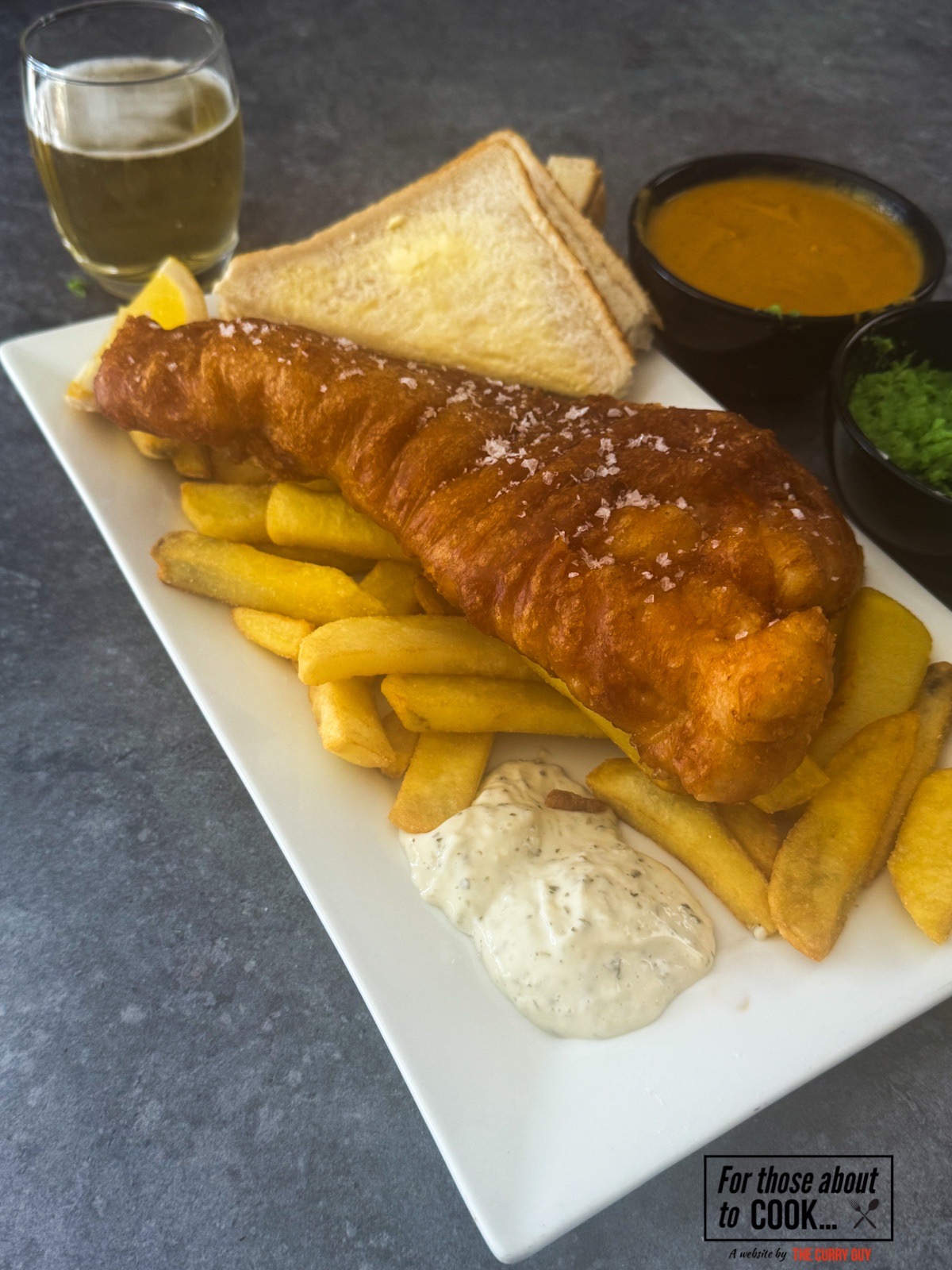
    Beer battered fish and chips with sides of curry sauce, tartar sauce and mushy peas.

    OK… So this is a recipe for beer battered fish and chips but these days I use cider. You can use either and beer will get you a more traditional flavor. There are few dishes in the world that capture the heart of a nation quite like fish and chips does for the British. Crispy battered fish, fluffy-on-the-inside and crispy on the outside chips, a sprinkle of salt, a splash of vinegar...what's not to like?

    Beer battered fish and chips with sides of curry sauce, tartar sauce and mushy peas.

    About this recipe.

    Fish and chips is not just food, it’s a cultural ritual. A bite of history. With this recipe, I’m going to show you how to make traditional fish and chips at home Though I have given the recipe a few modern twists but have pointed them out should you wish to have a more authentic version.

    Follow the recipe below and you will love how crispy and delicious your fish and chips are. You might just want to start your own fish and chips shop! Your beer battered fish and chips will be even more amazing if you fry them in beef tallow.

    Get ready to fry, season, and devour like a true Brit.

    What is the history behind fish and chips?

    Beer battered fish and chips have been popular in the UK since the 19th century, when fried fish—introduced by Jewish immigrants from Spain and Portugal—met fried potatoes, already popular in the north of England.

    The first known fish and chip shop (or “chippy”) opened in London in the 1860s, and from there, the dish took off.

    By World War II, fish and chips were considered so vital to national morale that they were never rationed. Visit any seaside in the UK and you will see that they continue to be a must-have meal for people up and down the country.

    [feast_advanced_jump_to]

    Ingredients

    There aren't a lot of ingredients but they all work so well together. This is simple but delicious comfort food. Be sure to get all your ingredients ready before you start. I use homemade beef tallow which really takes the beer batter fish and chips to the next level.

    Ingredients for the recipe laid out on a counter top.
    • cod or haddock
    • Salt and pepper
    • all-purpose (plain) flour
    • rice flour
    • baking powder
    • Cheyenne chili powder (optional)
    • beer or cider
    • salt
    • Beef tallow or vegetable oil
    • frozen chips

    See recipe card for quantities.

    Step by step photos for the fish.

    You will see from the following photographs that this recipe really is easy. I have tried to show the thickness of the batter which is really important.

    All of the batter ingredients in a mixing bowl.
    1. Step 1: Pour all of the batter ingredients into a mixing bowl.
    Whisking the batter ingredients.
    1. Step 2: Begin whisking the batter together. At first it will be quite lumpy so whisk hard and fast.
    The creamy whisked batter in the mixing bowl.
    1. Step 3: Whisk until the batter is creamy smooth. This will take a couple of minutes.
    Dusting a piece of cod with the plain and rice flour.
    1. Step 4: Dust a piece of fish with the rice flour and plain (all purpose) flour mixture. Shake off any excess flour.

    Adding the fish to the batter.
    1. Step 5: Dip the flour dusted fish into the batter and ensure it is completely coated with the batter.
    Slowly lowering the battered fish into the hot oil.
    1. Step 6: Slowly lower the fish into the hot fat. Let it cook a little before lowering it further down and continue until the batter has hardened some before letting go.

    Deep frying the fish.
    1. Step 7: Fry for about 3 to 4 minutes, carefully turning once and spooning the hot oil over the fish until crispy and golden brown.
    The cooked beer batter fish on a rack to drip excess oil.
    1. Step 8: Transfer the cooked fish to a rack to drip any excess oil and keep warm in a low oven while you cook the rest of the fish and chips.

    Beer batter fish and chips on a plate with curry sauce, mushy peas and tartar sauce.

    Substitutions

    Below you will find a few substitutions that will work for your beef battered fish and chips.

    • Beef Tallow - Traditionally, fish and chips were cooked in beef tallow (beef dripping). You are very lucky to find fish and chip shops that still do but it really takes things up a level or two. If you mush, you could substitute vegetable oil.
    • Cod or Haddock - Cod is great and the most common fish used for fish and chips. You really could substitute and meaty white fish for the cod or haddock.
    • Cider - The use of cider in the batter is a new thing and I like it. You could use you beer of choice or if you want a non-alcoholic version, just add ice cold sparking water (club soda).
    • Frozen Chips: I prefer to use frozen chips and for good reason. The chips that are frozen and sold have been hand-picked for perfection. Most chip shops use them because they can cook them to perfection, quickly as the chips have already been flash fried before freezing and packaging. Some places cook homemade chips using raw potatoes but they are often a big, soggy disappointment. If you want to make your own, see the notes in the recipe card below.

    Equipment

    1. Deep Fryer or Heavy Pot

    • Purpose: For frying both the fish and chips.
    • Tip: A deep, heavy-bottomed Oven or Air Fryer (Best Method):
    • Preheat oven to 180–200°C (350–400°F)
    • Place fish and chips on a wire rack over a baking tray (to keep air circulating)
    • Heat for 10–15 minutes, flipping halfway through
    • For extra crispiness, give them a quick blast under the broiler or in an air fryer at 180°C (350°F) for 5–7 minspot like a Dutch oven or stockpot works great if you don’t have a fryer.

    2. Thermometer

    • Purpose: To monitor oil temperature (130°C / 266°F for the first chip fry, and 180°C / 356°F for the second chip fry and fish).
    • Tip: An instant-read or clip-on candy thermometer is ideal for this if you don't have a built in deep fat fryer thermometer.

    3. Slotted Spoon or Spider Strainer

    • Purpose: To safely lift fish and chips out of the hot oil. Deep fat fryers have a basket so you won't need this if using a deep fat fryer.

    4. Wire Rack or Paper Towels

    • Purpose: For draining excess oil after frying.
    • Tip: A wire rack over a baking tray helps keep things crispy.

    5. Mixing Bowls

    Purpose: For making the batter, dredging the fish, and prepping ingredients.

    Storage

    For the Fish:

    1. Cool it completely before storing (to avoid soggy batter).
    2. Wrap it loosely in foil or parchment paper—this helps avoid trapping steam which can make it soggy.
    3. Place it in an airtight container or zip-top bag.
    4. Refrigerate and use within 1–2 days.

    For the Chips:

    Keep in the fridge for up to 2 days.

    Let them cool down completely.

    Store in a separate airtight container (don’t store chips and fish together or they’ll get soggy).

    How do you reheat leftover fish and chips?

    Oven or Air Fryer (Best Method):

    • Preheat oven to 180–200°C (350–400°F)
    • Place fish and chips on a wire rack over a baking tray (to keep air circulating)
    • Heat for 10–15 minutes, flipping halfway through
    • For extra crispiness, give them a quick blast under the broiler or in an air fryer at 180°C (350°F) for 5–7 mins

    How do you cook the chips?

    I highly recommend using frozen chips. That is what is most often used at fish and chip shops and for good reason. Frozen chips are chosen by the buyers for perfection. You know you will get a crispy exterior chip that is also nice and fluffy on the inside.

    Cook the chips from frozen. You could just read the instructions on the packaging but I recommend cooking them in beef tallow for optimum flavour and frying them twice. Frozen chips are already fried once before freezing so you are going to be getting triple fried chips that are amazing.

    See the recipe card below for cooking instructions.

    Top Tip

    Make sure that you add the beer or cider to the batter when it is ice cold from the fridge. This will help ensure that the fish is extra crispy when you fry it.

    FAQ

    Why do you add rice flour to the fish and batter?

    Although this is not a traditional ingredient in fish and chips, the rice flour will help achieve a crispier batter when you fry it. You can leave it out but trust me here!

    Do you hav to triple fry the chips?

    No but they will be crispier and fluffier if you do.

    More Recipes

    Following are a few of our most recent recipes...

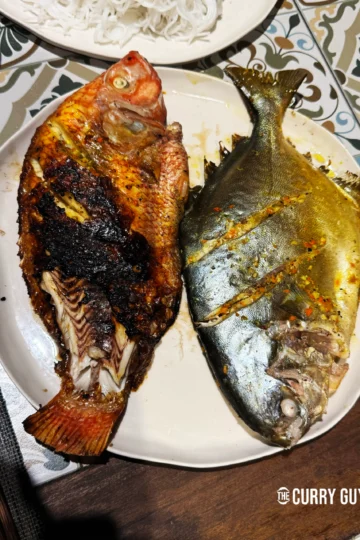
    • fish served up on a plate
      Vietnamese Fish In Banana Leaf
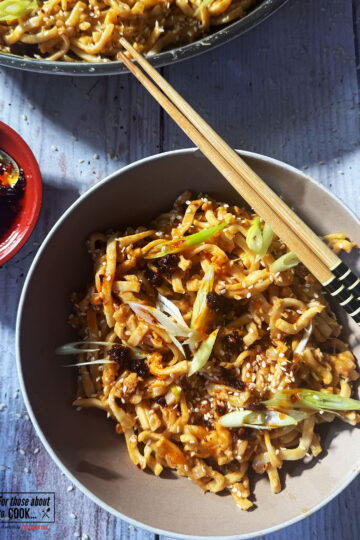
    • Peanut butter noodles served in a bowl topped with spring onion and sesame seeds
      Peanut Butter Noodles
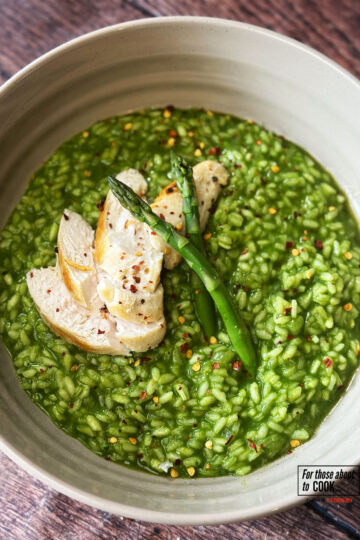
    • Risotto verde served with sliced chicken and asparagus sprigs
      Risotto Verde
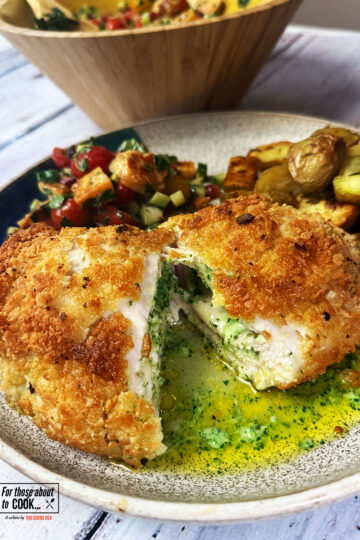
    • Chicken Kiev recipe plated up with garlic butter oozing out
      Chicken Kiev Recipe

    Recipe for Beer Battered Fish and Chips

    Recipe

    Beer battered fish and chips with sides of curry sauce, tartar sauce and mushy peas.

    Fish and Chips

    Yield: 4
    Prep Time: 15 minutes
    Cook Time: 50 minutes
    Total Time: 1 hour 5 minutes

    This is fish and chips at its very best! You need to do the first two fries of the chips before frying the fish. Then when the fish is cooked and being kept warm in a low oven, you do the final blasting of the chips in the hot oil/tallow.

    5.0 Stars (1 Review)

    Ingredients

    • FOR THE FISH
    • 4 fillets of cod or haddock (approx. 150–200g each)
    • Salt and pepper
    • 1 cup all-purpose flour (for dusting)
    • ½ cup rice flour (for dusting)
    • FOR THE BATTER
    • 1 cup all-purpose flour
    • ¼ cup rice flour
    • 1 teaspoon baking powder
    • 1 teaspoon Cheyenne chili powder (optional)
    • 1 cup ice cold beer or cider
    • 1 teaspoon salt
    • FOR THE CHIPS
    • 1 bag of frozen chips (your favourite brand)

    Instructions

    1. In a mixing bowl, mix the flour, baking powder, salt and cayenne, if using. Slowly whisk in the cold
      cider until smooth and lump-free. Let the batter rest in the fridge for 10 to 15 minutes.
    2. When ready to fry, heat the beef tallow or oil to 360°F/180°C. Pat the fish fillets dry and season generously with salt and pepper. Dust the fish with the rice flour and plain (all purpose) flour mixture. Dusting the fish fillets first will help the batter stick and the rice flour will make the fish extra crispy.
    3. When the oil is up to heat, dip a piece of the fish into the batter so that it is completely coated in batter. Then slowly lower the battered fish into the hot oil.
    4. Fry for 5 to 8 minutes, turning the fish a couple of time until the batter is crispy and golden brown.
    5. Transfer the fish to a rack to train any excel oil. Keep warm in a low oven while you cook the rest of the fish and then the chips
    6. FOR THE TRIPLE COOKED CHIPS
    7. You should fry the chips before starting to fry the fish. Heat the oil or tallow to 275–300°F (135–150°C). Fry in batches for 3 to 4 minutes or until the chips are turning a pail yellow but not golden. Transfer to a paper towel lined rack to cool. For best results, let them cool in the fridge for 10 to 15 minutes.
    8. Raise the heat of the oil or tallow to 320–340°F (160–170°C). Fry the chips again in batches for about 3 minutes or until they are just starting to turn golden. Transfer to a paper towel lined rack and let them cool to room temperature either in or out of the fridge. All of this can be done before you start frying the fish.
    9. For the final frying, Raise the temperature to 375–390°F (190–200°C) and fry in batches for another 1 to 2 minutes or until crispy, golden brown. Serve immediately with the fish.
    © Dan
    Cuisine: British / Category: Fish

    How to Make Beef Tallow

    April 14, 2025 By Dan

    Beef tallow in containers ready for storing.

    This is my quick and easy method for how to make beef tallow.

    You can make the process of making beef tallow a long and slow process or do it the easy way using ground beef suet. You will cut hours of work by using suet and most good butchers will have it ready prepared for you.

    Beef tallow in containers ready for storing.

    About this beef tallow recipe.

    I used to prepare beef tallow using chopped up beef fat. You can do that too but it takes a lot longer. First, you need to remove any silver skin from the fat before finely chopping it to render in a pan over a low heat.

    Using beef suet, all that work is done for you. You just need to add the suet to your pan over a low heat and let it render down. As the fat render, you need to skim it before running through a cheese cloth lined strainer so that the beef tallow is free of any impurities.

    You can use your homemade beef tallow to fry instead of using vegetable oils or to make the most delicious fish and chips.

    [feast_advanced_jump_to]

    Ingredients

    There's only one ingredient to make beef tallow and that is beef fat. Below you will see the beef suet I purchased to make the process a lot easier and faster.

    Beef suet ready to be made into tallow.
    • Beef Suet

    See recipe card for quantities.

    Instructions

    As you will see from the photos below, making beef tallow this way is quick and easy.

    Adding beef suet to a slow cooker on low.
    1. Step 1: Fill a pot or slow cooker with the suet. It will reduce down if you have more to add.
    Melting the suet in the pot.
    1. Step 2: Slowly melt the suet over a low heat. As you do this, impurities will rise to the top. Skim that off and discard.
    Adding more suet to the pot.
    1. Step 3: As the suet melts it will reduce in volume. You can add more suet to the pot when it does if you have more.
    Skimming the impurities of the top of the beef tallow.
    1. Step 4: Skim as much of the goop that rises to the top off as you can.
    Pouring the beef tallow through a cheese cloth that is in a strainer.
    1. Step 5: Line a strainer with a fine cheese cloth or similar and pour the tallow through it into a bowl.
    The impurities left behind in the cheese cloth after straining.
    1. Step 6: The remaining impurities will filter out as you pour it through the cloth and strainer.
    Beef tallow in a jug.

    A Brief History of Tallow

    Before vegetable oils took over grocery store shelves, tallow was the go-to fat for everything from frying to candle-making. Ancient civilizations used tallow not only for food but for lubrication, soap, and skincare.

    In Victorian times, it was used in lamps and soaps—and during wartime shortages, people hoarded tallow for its many uses.

    It wasn’t until the mid-20th century, when hydrogenated oils and seed-based fats were marketed as “healthier,” that tallow fell out of favor. But with modern nutrition slowly reassessing the healthiness of saturated fats, tallow is enjoying a well-deserved revival.

    How do you cook beef tallow?

    The secret to success, whether you are using suet or chopped up beef fat is to render the fat over a low heat. Be sure to skim off any impurities and job done!

    What Is Beef Tallow?

    Beef tallow is rendered beef fat, usually sourced from around the kidneys and loins—called suet. When this fat is gently heated and melted down, the impurities are removed, and what’s left is a creamy, shelf-stable fat that solidifies at room temperature. Pure tallow has a clean, mild aroma and a silky texture that makes it incredibly versatile.

    Unlike raw fat trimmings, tallow is purified through rendering, which gives it a longer shelf life and makes it safer and easier to use in both culinary and non-culinary ways.

    Is Tallow the same as lard?

    No but similar. Tallow is to beef what lard is to pork. Both are rendered fats, but they behave slightly differently:

    • Tallow is harder and more stable at room temperature, making it great for high-heat cooking and long storage.
    • Lard is softer, milder in flavor, and often used in baking (think flaky pie crusts).

    Both beef tallow and pork lard have their own strengths, but tallow tends to win out when it comes to deep frying and traditional savory dishes.

    Why should you make beef tallow?

    Beef tallow is of course available prepared from many shops. The thing is, it is a lot more expensive to purchase than to simply make it yourself. We're talking extremely more expensive and who want to pay a lot for something that you can make so easily yourself?

    Equipment

    1. A slow cooker: I find slow cookers to be the best and most fuss free way of preparing beef tallow. You can simply add the beef suet and set your slow cooker to low. Using beef suet, the job should be done in less than an hour!
    2. A heavy bottomed pot: You can also use a good pot to render the beef suet but you will need to watch it carefully so that the suet doesn't burn to the bottom.
    3. A large mixing bowl: You will need to use this to strain the melted beef fat into.
    4. A fine mesh strainer: This can be used to skim the impurities off the top of the beef tallow as it cooks.
    5. Small containers: Small plastic or glass containers are great for storing the beef tallow for an extended time.

    Storage

    Once you have made the tallow, you can store it in a sealed jar at room temperature for about 1 to 2 months. Place it in the fridge and you can store it for 6 months or longer.

    You can also freeze the tallow for up to a year. If doing this, I recommend storing it in convenient size portions and date and label the container.

    Beef tallow is clear and yellow when hot. It will turn white and solid when cold. Be sure to store in dry and very clean containers away from moisture.

    Top Tip

    You need to render the fat over a very low heat. This will stop it burning and produce a clearer beef tallow.

    FAQ

    Do you have to use beef suet to make tallow

    No. All you need is beef fat. Remove any silver skin from the fat and chop it into small pieces. Then render it down. This could take a few hours and you need to watch it so that the fat doesn't burn to the bottom. Using suet is a lot faster and easier.

    What can you use beef tallow for?

    It is great for frying, searing, sautéing and roasting but that's not all! It is also good for making pie crusts and pastries giving them crispiness and depth. You can also use tallow to season pans. It's beyond the scope of this blog post but some people use beef tallow for skin care and making candles and soaps.

    Where can you get the beef fat for tallow?

    Local butchers, farmers shops, online meat suppliers and specialty shops. Many butchers will let you have the suet with no charge or at a very low price. You might have to do some searching but you will find it.

    New recipes to try...

    Following are some of the recently added recipes.

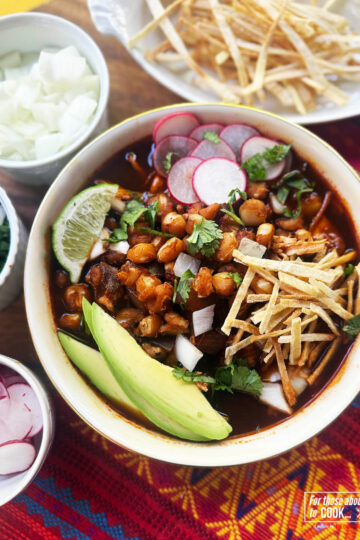
    • Pozole Rojo served up in a bowl with fresh toppings
      Pozole Rojo De Pollo
    • pork carnitas
      Pork Carnitas (Mexican Slow Cooked Pulled Pork)
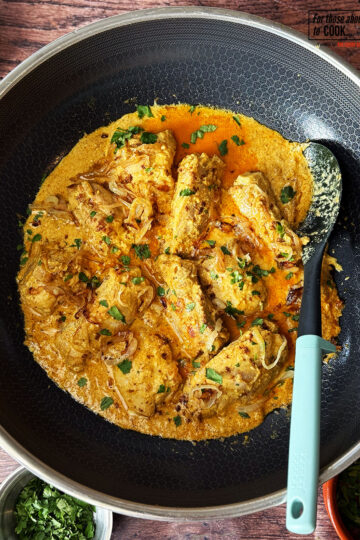
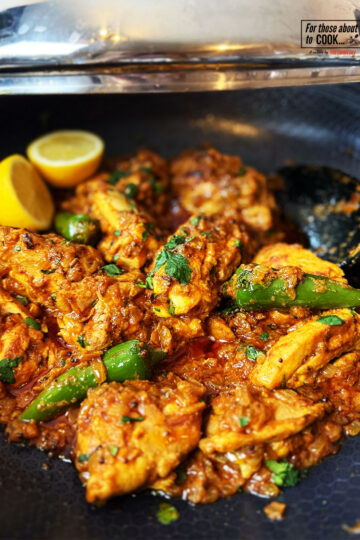
    • Nizami chicken curry served in the pan with fried onions and coriander
      Nizami Chicken Curry
    • Karumura chicken served in the pan
      Karumura Chicken

    Recipe

    Beef tallow in a jug.

    Beef Tallow

    Yield: 12 to 16 cups
    Prep Time: 2 minutes
    Cook Time: 3 hours
    Total Time: 3 hours 2 minutes

    Beef tallow is really easy to prepare and has many uses. This recipe will help you get it just right! You can easily up or downscale the ingredients depending on how much you want to make. The cooking times will vary depending on how much you make and the heat you cook over.

    5.0 Stars (1 Review)

    Ingredients

    • 12lbs (6kg) ground beef suet (You can also use beef fat cut into small pieces)

    Instructions

    1. I recommend using a slow cooker set to low or your stovetop in a heavy bottomed pan over a low heat. half of the suet or chopped beef fat into your pan or slow cooker. Let it slowly render down.
    2. As it renders down, you will see that impurities rise to the top and some will form at the bottom of the pan. Using a skimmer of some sort, skim the impurities off the top and discard.
    3. Add the remaining suet or beef fat and continue to let it render down, skimming as it does.
    4. Once the fat has all rendered, pour it through a fine mesh strainer, lined with a cheese cloth into a bowl. This will catch any of the impurities you did not skim and also the impurities that are at the bottom.
    5. Pour into suitably containers. When the tallow is hot, it will be a deep yellow colour. As it cools, it will be come white and hard.
    Nutrition Information:
    Yield: 30 Serving Size: 1
    Amount Per Serving: Calories: 15Total Fat: 1gSaturated Fat: 1gTrans Fat: 0gUnsaturated Fat: 1gCholesterol: 3mgSodium: 1mgCarbohydrates: 0gFiber: 0gSugar: 0gProtein: 1g
    © Dan
    Cuisine: British / Category: Beef Recipes

    Chicken Paella

    April 14, 2025 By Dan

    Chicken paella being served up on a plate.

    I love paella. This Valencian style chicken paella is one of my favorites and I have been making it for decades, since my first trip to Spain. It isn't exactly an authentic Valencia chicken paella because I insist on adding Spanish chorizo which I have heard is a big no no. Oh well, I like it so in it goes. You can of course leave it out if you like.

    Chicken paella being served up on a plate.

    What is a Valencian chicken paella?

    This chicken paella comes pretty close to being authentic. If you want to make it authentic, just leave out the chorizo.

    Paella Valenciana is the original, traditional version of paella that comes from the Valencia region on Spain’s eastern Mediterranean coast. It’s a rice-based dish cooked in a wide, shallow pan (called a paellera), and traditionally cooked over an open fire just like I did for this recipe.

    The classic version can feature just chicken or other meats. Following is a list of what you might find in an authentic Velencian chicken paella.

    • Short-grain rice (like bomba, senia or arborio)
    • Rabbit
    • Chicken
    • Snails
    • Green beans and butter or lima beans
    • Saffron, paprika, and sometimes rosemary

    [feast_advanced_jump_to]

    What are the origins of Valencia chicken paella?

    Valencian chicken paella has its roots in the Albufera lagoon region near Valencia. It's a rural area full of rice paddies, game, and fresh vegetables.

    This dish was popular with the local farmers and laborers in the region in the 15th and 16th Centuries and still is today. The farmers and laborers would gather local ingredients and cook them in a large paella pan over an open fire.

    Paella wasn't the expensive dish it is for tourists today. It was low cost and easy food.


    How do you serve chicken paella?

    Paella is meant to be shared. Traditionally, it's cooked outdoors, with everyone gathering around the fire. No plates—people just eat straight from the pan with wooden spoons. It’s as much about community as it is about cuisine.

    Of course you can plate it up if you like but in Spain eating directly from the pan is still a family ritual.

    While the paella is cooking, you might like to offer around some Padron peppers. They are a delicious and easy tapa.


    Ingredients

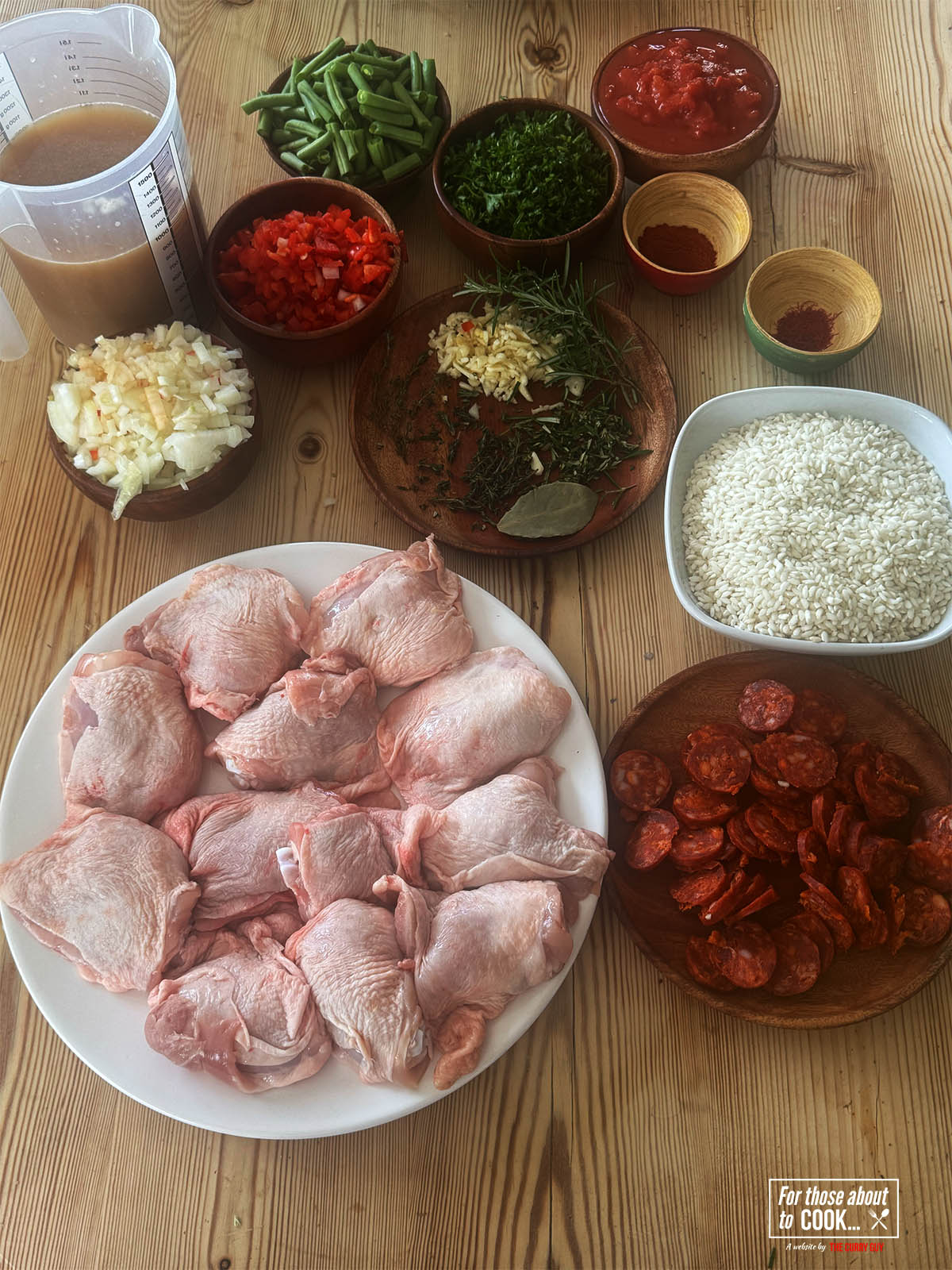
    There are quite a few ingredient in this chicken paella but they are all easy to source. Not photographed are the butter beans because I decided to add them while I was cooking.

    The ingredients for the recipe on a counter top.

    • extra virgin olive oil
    • onion
    • red bell pepper
    • bone in chicken thighs
    • dry cured Spanish chorizo
    • rosemary
    • thyme
    • sweet smoked paprika
    • green beans
    • cooked butter beans
    • Arborio rice
    • chicken bone broth
    • saffron
    • chopped tomatoes
    • Parsley
    • Salt and pepper

    See recipe card for quantities.


    A log fire burning in a fire pit.

    Cooking your chicken paella over a wood fire is the authentic way of doing it but you can cook it on your stovetop.


    Instructions

    Use this section for process shots, alternating between the step and image showing the step. Users don't like seeing process shots cluttering up the recipe card, so include your process shots here.

    Adding salt and oil to a paella pan over the fire.
    1. Step 1: Place your pan over a medium-high heat. Sprinkle in about a teaspoon of flaky salt and pour in the olive oil.
    Stirring the chopped onions and bell pepper into the oil in the pan.
    1. Step 2: When the oil is hot but not smoking, stir in the chopped onions and bell pepper and fry for about 5 minutes to soften.

    Adding the chicken to the pan to sear the exterior.
    1. Step 3: Push these veggies over to a cooler side of the pan and add the chicken thighs, skin side down.
    Adding the chorizo to the pan to sear it.
    1. Step 4: Brown the chicken all over and then add the chorizo to brown it too.

    Adding the rosemary and thyme to the pan along with the chopped garlic
    1. Step 5: Stir in the garlic, rosemary, bay leaf and thyme and fry for another 30 seconds.
    Stirring in the paprika
    1. Step 6: Then stir in the paprika and add a drop of water or stock so that the paprika doesn't burn.

    Adding a little chicken stock so that the paprika doesn't burn.
    1. Step 7: Pour in about 2 cups (500ml) of the stock and bring it to a simmer.
    Adding the green beans a butter beans to the pan with a little more stock.
    1. Step 8: Add the green beans and butter beans and stir well to combine.

    Stirring in another 4 cups of stock and adding the saffron to bring to a simmer.
    1. Step 9: Stir in the saffron and simmer it all for about a minute.
    Adding about half the rice and the chopped tomatoes.
    1. Step 10: Add half the rice and the chopped tomatoes and stir well.

    Stirring in the remaining rice.
    1. Step 11: Pour in the remaining rice and stir it all together.
    Adding the remaining stock to the pan.
    1. Step 12: Add another 2 cups (500ml) stock and bring to a simmer. Allow this to cook for about 10 minutes.

    Cooking the rice in the hot stock.
    1. Step 13: Continue simmering and adding more stock as required. You want the rice to be tender but not mushy.
    The rice plumping up in the pan.
    1. Step 14: Once the rice is tender, continue to let the stock cook down and soak into the rice.

    The finished chicken paella.
    1. Step 15: Once all the liquid has evaporated, listen carefully for the crackling sound. This is the rice caramelising to the bottom: the socarrat. Let the rice crackle for about 10 to 15 seconds and then take the pan off the heat. Let it stand undisturbed for 5 to 10 minutes which will help achieve a good socarrat.
    Serving the chicken paella.
    1. Step 16: Enjoy! The chicken paella can be eaten directly from the pan or you can plate it up.

    What is socarrat?

    Socarrat is the caramelized crust of rice that forms at the bottom of a well-made paella. It’s not burnt, but perfectly toasted—rich, slightly nutty, and deeply flavorful.

    It happens when the broth has been fully absorbed and the rice at the bottom starts to fry gently in the oil, forming a thin, crispy layer.


    How do you achieve a perfect socarrat?

    Let the paella cook undisturbed for the final few minutes. Once the liquid absorbs into the rice, listen for a gentle crackling sound—a sign that the socarrat is forming.

    You can check by gently scraping the bottom with a spoon. If it resists and has a toasty smell, you’ve done a great job.

    Remove from heat and let it rest for 5–10 minutes—this helps the socarrat set.


    Can you work ahead?

    You bet! In fact, it is a good idea to prepare your ingredients before you start cooking. You want everything ready to add to the hot pan and you can prepare it all one or two days ahead of cooking.

    Store all your ingredients in airtight container in the fridge.


    Variations

    Authentic Valencian chicken paella is often made just with chicken. Here are a few other things you can add that will be just as authentic.

    • Rabbit - Rabbit is a popular substitute for the chicken or you could add both. In Winter when rabbit is readily available, I always add it.
    • Snails - Paellas were originally peasant food and snails were readily available and cheap. Give it a try. Very good.
    • Baby Artichokes - When in season, artichoke heart are delicious added to a paella, either with the green beans or as a substitute.

    Useful Equipment

    Paella Pan: Paella pans are the perfect pans for this dish, both for cooking and presentation. You can also cook your chicken paella in any large frying pan.

    A long spoon or spatula: This will really come in handy for stirring especially if you are cooking over wood. The fire can get quite hot so a long handled spoon is good to have on hand.

    A small pot: For heating the chicken stock before adding it to the paella pan. It is always best to add the stock hot.


    Storing Leftover Chicken Paella

    You can store leftover chicken paella in an airtight container for 3 to 4 days. Let the paella cool to room temperature, but no longer than two hours before refrigerating.

    You can also freeze leftovers for up to 1 month but the rice might be softer and slightly mushy after thawing. I recommend labelling and dating your containers before freezing.

    To reheat, let it thaw completely in the fridge and then heat it up in your microwave or in a pan over a medium heat.


    Top Tip

    Work on making a socarat. Listen carefully at the end off cooking after that liquid has been absorbed. When you hear the rice crackling, get the paella off the heat to rest for about 10 minutes before serving which will further develop the socarrot.


    FAQ

    What kind of rice is best for paella?

    Use a short-grain Spanish rice, such as Bomba, Calasparra or Senia if you can get it. These types of rice absorb the liquid without becoming mushy and help produce the classic paella texture. If, like me, you find it difficult to find a Spanish rice, you can use Arborio which is the rice used in Italian risotto. It is a good substitute but it may get a creamier texture than paella calls for.

    Which cuts of chicken are best for chicken paella

    Bone in thighs or legs with the skin left on. The bones will add more depth of flavour to the paella. If you want, you could use boneless pieces of thigh meat but you will lose some flavor.

    Do you have to use a paella pan?

    Ideally yes but you can also use a large frying pan of skillet. Paella pans are shallow and wide which helps the rice cook correctly. Don't use deep pans or woks as cooking this way will produce more steam and prevent proper evaporation.

    How do you know when the chicken paella is ready?

    Your chicken paella is ready when the rice is tender but not mushy and the chicken is cooked through. Once all the liquid is absorbed listen for the crackling noise which is the rice caramelising to the bottom, the socarrat. Let it caramelise for about 10 to 15 seconds and get it off the heat. Allow to sit for 5 to 10 minutes to further develop the socarrat.


    Related

    Looking for more Spanish recipes? Try these:

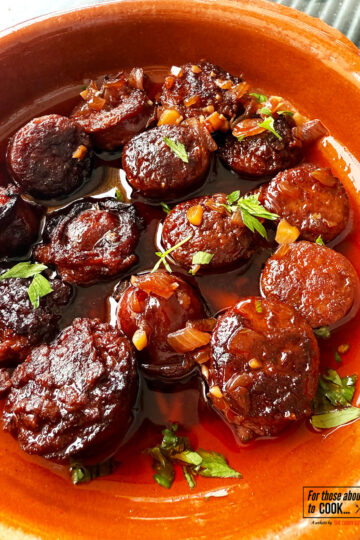
    • Chorizo in red wine served in a tapas dish
      Chorizo Al Vino
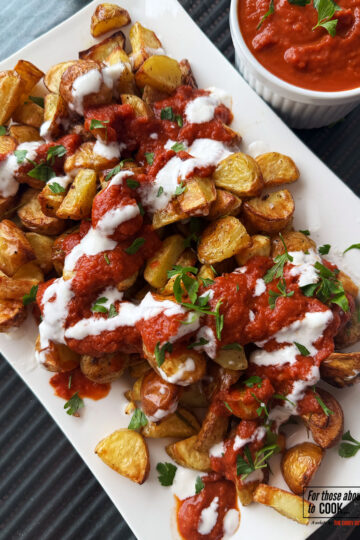
    • Patatas bravas served with a spicy tomato sauce
      Patatas Bravas
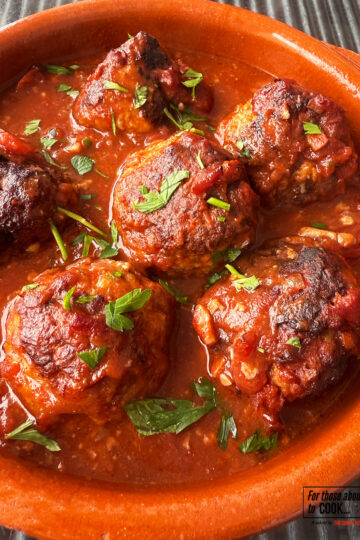
    • Albondigas in a tapas dish topped with parsley
      Albondigas (Spanish Meatballs)
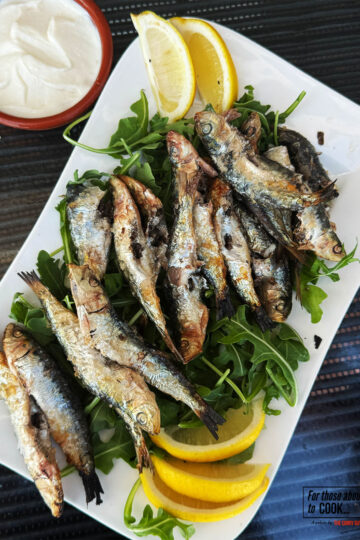
    • Grilled sardines with salt served on a plate with lemon wedges.
      Grilled Sardines with Salt

    Recipe

    The finished chicken paella.

    Chicken Paella

    Yield: 4 to 6
    Prep Time: 15 minutes
    Cook Time: 45 minutes
    Total Time: 1 hour

    This Valencian style chicken paella tastes amazing. You can cook it in under an hour and it's all cooked in one pan. It is the ultimate one pan meal.

    4.9 Stars (129 Reviews)

    Ingredients

    • 1 teaspoon salt plus more to taste
    • ¼ cup (70ml) extra virgin olive oil
    • 2 medium onions, finely diced
    • 1 red bell pepper, finely diced
    • 10 bone in chicken thighs
    • 10 oz dry cured Spanish chorizo, thinly sliced
    • 6 cloves garlic, finely chopped
    • 2 sprigs rosemary
    • 2 sprigs thyme
    • 1 bay leaf
    • 1 to 2 teaspoon sweet smoked paprika (preferably Spanish paprika)
    • 1 cup green beans
    • 1 cup (100g) cooked butter beans
    • 3 cups Arborio rice
    • 6 to 8 cups chicken bone broth
    • 1 teaspoon saffron
    • 15oz (400ml) chopped tomatoes
    • Parsley
    • Black pepper to taste

    Instructions

    1. Heat a paella pan or large frying pan over a medium-high heat. Sprinkle in about 1 teaspoon of flaky salt and add the olive oil.
    2. When the oil is hot but not smoking hot, stir in the chopped onions and bell pepper
    3. Fry the onion and bell pepper for about 5 minutes to soften and then scrape it all to one side of the pan. Situate your pan so that the onions and bell pepper are not right over the heat.
    4. Add the chicken, skin side down and brown if for a few minutes and then turn it over to sear the other side.
    5. Add the chorizo and brown it for a few minutes, stirring regularly for even cooking and then add the chopped garlic, rosemary, bay leaf and thyme.
    6. Stir everything in the pan together to fry for about 2 minutes and add the paprika and a spash of water or stock so that the paprika doesn’t burn.
    7. Then stir in the green beans and butter beans and half of the rice along with the chopped tomatoes. Stir well and then add the remaining rice and about 2 cups (500ml) of the stock.
    8. Add the saffron and bring it all to a simmer, stirring regularly.
    9. Now pour in about 2 more cups (500ml) of the chicken stock and let it come to a simmer. Allow the paella to cook for about 30 minutes adding more stock as necessary. You want the rice to be good and tender.
    10. Once the rice is tender, continue cooking it all down until almost all of the stock has cooked down. Don’t stir from the bottom. You want the rice to stick to the bottom and brown some. That is the very important socarrat. In the last few minutes of cooking when the liquid is all absorbed into the rice, let it cook and listen carefully for the rice to start to make a crackling noice as it caramelises to the bottom of the pan.
    11. When you hear the crackling rice, let it cook for another 10 seconds and get it off the heat. Allow it to stand, undesturbed for 10 minutes. If it is cold outside or in your kitchen, cover the paella with foil to keep it hot. Letting it stand in this way will help further develop the socarrat.
    12. To finish, season with salt and pepper to taste and garnish with the chopped parsley. Serve with lemon wedges and enjoy!
    Nutrition Information:
    Yield: 6 Serving Size: 1
    Amount Per Serving: Calories: 1208Total Fat: 51gSaturated Fat: 16gTrans Fat: 0gUnsaturated Fat: 32gCholesterol: 339mgSodium: 5243mgCarbohydrates: 48gFiber: 4gSugar: 9gProtein: 143g
    © Dan
    Cuisine: Spanish / Category: European

    Italian Gnocchi Recipe

    April 12, 2025 By Joe

    Italian Gnocchi Recipe

    This Italian Gnocchi recipe shows you how to prepare perfect light and fluffy gnocchi, ready to prepare with your favorite sauce. There are tips for boiling, frying and getting the perfect finished dish. Get the family involved and make a large batch, perfect for freezing and cooking straight from frozen, it's all covered here.

    Italian Gnocchi Recipe

    About this Italian Gnocchi Recipe

    Gnocchi are soft, fluffy and small dumplings made with a mixture of potato, flour and egg. Traditionally, gnocchi is served as comfort food in Italy and known for their pillowy texture and versatility. This recipe shows you how to prepare the perfect fluffy gnocchi and provides you with step by step tips for success, suggestions for serving and how to store both in the refrigerator and freezer for best results.

    Traditionally, gnocchi is made without egg. Online you will find it to be 50/50 whether a recipe uses egg or not. In this recipe I use egg, simply for extra security when binding the dough as the dough relies heavily on your potatoes being starchy enough. Check out my top tip below if you're choosing to make more gnocchi as you don't want to increase the quantity of egg as you would with the other ingredients.

    Ingredients

    Delicious fluffy gnocchi only takes few ingredients you will likely already have in your home. Here is what you will need...

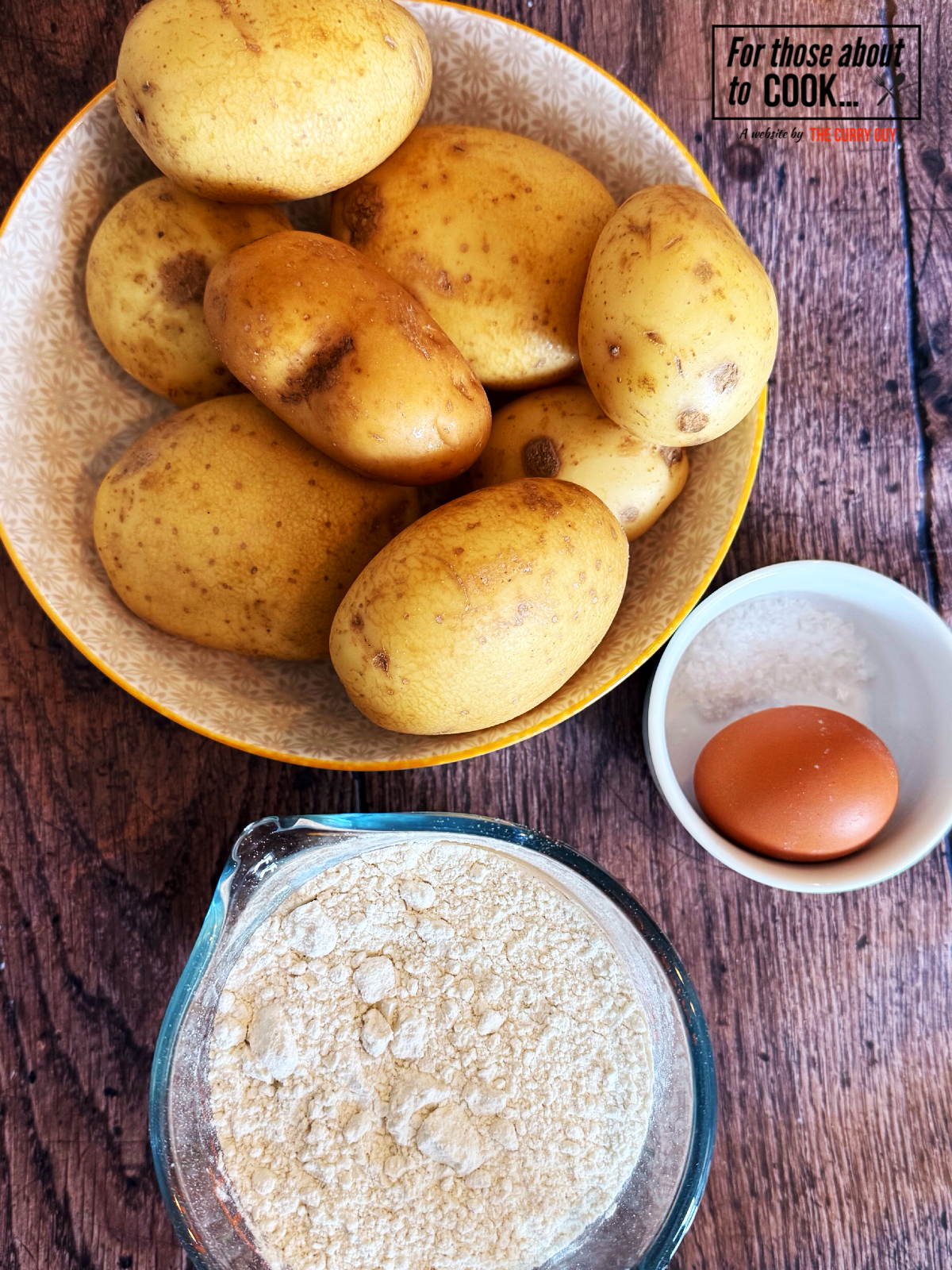
    Ingredients for this Italian Gnocchi recipe
    • Russet (idaho) potatoes or Maris Piper potatoes (UK)
    • 00 flour
    • egg
    • salt

    See recipe card for quantities.

    Step by step photographs...

    Follow these step by step photographs to make the perfect gnocchi. I show you how to get the authentic gnocchi shape for amazing results every time.

    washing potatoes
    1. Step 1: Wash your potatoes under cold water to remove any dirt and grit.
    Boiling the potatoes
    1. Step 2: Boil a pan of water and add your potatoes. Boil for 40-50 minutes until a knife can easily poke into one.
    Drain the water
    1. Step 3: Drain the water and potatoes into a colander.
    Peeling skin of the potatoes for this Italian gnocchi recipe
    1. Step 4: Allow your potatoes to cool slightly, and when you are able to handle them, carefully peel the skins off.
    ricing the potatoes
    1. Step 5: Using a potato ricer, mash your potatoes into a mixing bowl.
    preparing the gnocchi
    1. Step 6: Add your flour to a flat surface and create a well, add your riced potatoes on-top and again create a well. Finally, crack an egg in the middle and add a pinch of salt.
    preparing the dough
    1. Step 7: Whisk the egg with a fork and carefully bring the dough together.
    step by step making the gnocchi shape
    1. Step 8: Split the dough into four sections and roll each piece into a thin log (about ¾ of an inch thick). Cut into one inch pieces. To shape, press your piece of gnocchi into a fork and roll along the prongs.
    1. Step 7: To cook, bring a pan of water to the boil and as each piece rises to the top, remove them as and when with a slotted spoon. Add extra salt and pepper to taste and stir in some good quality olive oil.
    Italian gnocchi recipe with sage butter
    1. Step 8: Prepare you gnocchi however you like. Try this Gnocchi with butter and sage recipe (also below) or skip the frying and stir in this fresh basil pesto. The options are endless! Preparing it as a side dish? simply stir in some garlic butter.

    Hint: Some gnocchi recipes don't call for egg, this one does as it gives extra security when binding the dough as you're relying on your potatoes being starchy enough. If you are planning on doubling or tripling the recipe, I suggest not increasing the quantity of egg as you would the rest of the ingredients. For example, if tripling the recipe, us 2-3 eggs, starting with less and add more if the dough feels too crumbly.

    Variations

    Gnocchi are known for being incredibly versatile. You could fry them after the boiling process and prepare this Gnocchi with brown butter and sage recipe (also see below). You could also skip the frying and stir into a fresh basil pesto.Serving as a side dish? stir in some garlic butter. Delicious!

    Gnocchi with brown butter and sage

    Serves 4

    • 1 ½ lbs (650g) Gnocchi
    • 5 tbs (75g) unsalted butter
    • 20 fresh sage leaves
    • 3 cloves garlic (thinly sliced)
    • 3 tablespoon olive oil
    • salt and pepper to taste
    • parmesan for serving
    gnocchi with brown butter and sage

    Instructions

    1. Bring a pan of water to the boil, add the gnocchi until it rises to the top, use a slotted spoon remove.
    2. In a pan, over a medium heat, add your olive oil. When the oil is hot, toast the gnocchi on both sides until golden. Set aside in a bowl and season with salt and pepper.
    3. Add the butter to the pan and allow to melt over a medium heat. Continue heating until it turns light brown in colour and has a nutty fragrance.
    4. Next add the sage leaves for five minutes until crisp,
    5. Then add the garlic slices and cook for 5 extra minutes, make sure your pan isn't too hot to avoid burning.
    6. Stir in the gnocchi, serve hot with a sprinkle of parmesan. Enjoy!

    Equipment

    You will need a large saucepan to fit 2lb (1kg) of potatoes. You will be boiling these whole so you need enough room. You will also need a potato ricer to make the perfect gnocchi. However, i've made it before by spooning the potato through a sieve, it works but it takes a long time so I do not recommend this option.

    Storage

    You're best storing gnocchi so that each piece is separate.. If you don't have enough space in your fridge, freezer, consider preparing the gnocchi on the day you are going to cook it all.

    uncooked gnocchi will last up to 5 days in the refrigerator, simply cook on demand by bringing a pan of water to the boil and as each piece rises to the top, remove using a slotted spoon.

    Cooked gnocchi will last in the refrigerator for up to 3 days depending on your sauce ingredients, if using.

    To freeze

    This Italian Gnocchi recipe freezes perfectly uncooked., however it is important that each piece is frozen separately before portioning into bags. This stops each piece sticking together and makes the cooking process super easy. See how I do this in the photographs below.

    To cook gnocchi from frozen, bring a pan of water to the boil, add the gnocchi and as an when each piece rises to the top of the water, remove with a slotted spoon and set aside.

    Freezing gnocchi
    Freezing the gnocchi

    Top Tip

    This Italian gnocchi recipe is perfect for a date night or an evening of family fun. Get as many hands involved as you can, especially if you're choosing to double the recipe. See how well it freezes below.

    Get the family involved!

    family making italian gnocchi recipe

    FAQ

    What is the best type of potato to use for this Italian Gnocchi recipe?

    Use a starchy potato like Russet/Idaho (US) or Maris Piper (UK. They are dry and fluffy, which helps the gnocchi hold together with less flour, making them lighter and more delicate.

    Why is my gnocchi dough too sticky or wet?

    This happens if during the boiling process, the potatoes absorbed too much water, which is also why it is important to boil them whole. Simply add a little extra flour at a time until the dough is soft but not sticking to your hands.

    More Italian Recipes

    Looking for other recipes like this? Try these:

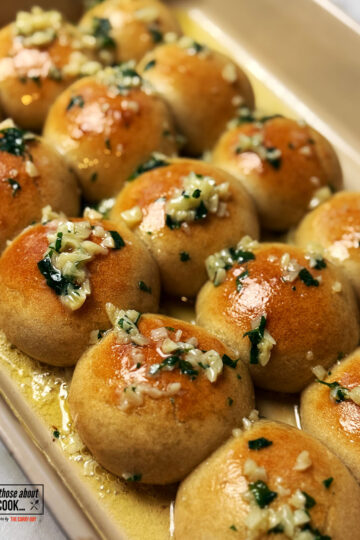
    • Garlic dough balls served in a baking dish
      Garlic Dough Balls
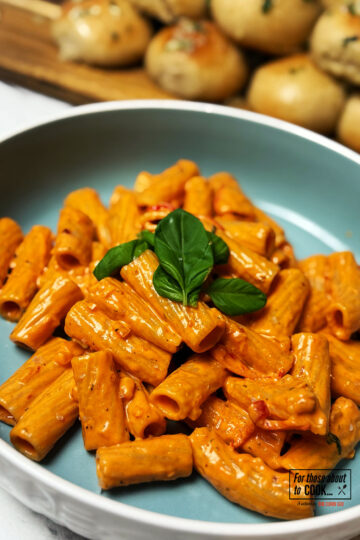
    • Spicy vodka pasta served in a bowl and topped with basil
      Spicy Vodka Pasta
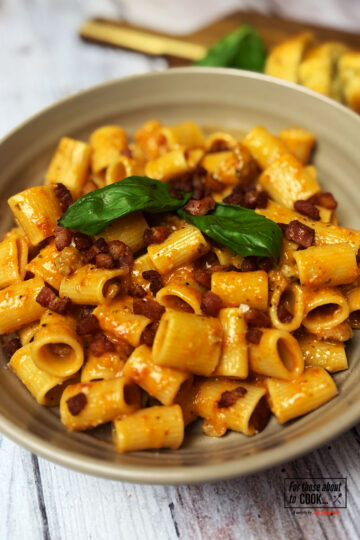
    • Pasta alla zozzona served in a bowl topped with pancetta and basil
      Pasta Alla Zozzona (Dirty Pasta)
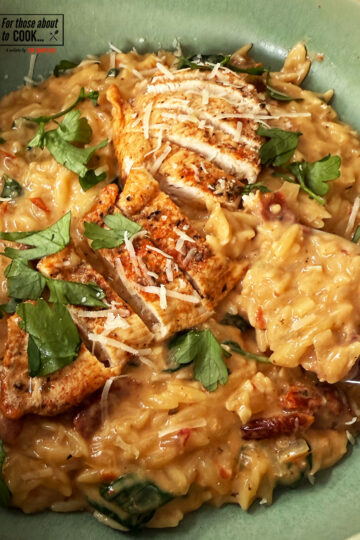
    • Finished plate of marry me chicken orzo
      Marry Me Chicken Orzo
    See more Italian →

    Pairing

    Gnocchi pairs perfectly with salad, try these:

    • Big mac salad
      Big Mac Salad
    • Green goddess salad served on a chilled plate next to a salad bowl.
      Green Goddess Salad
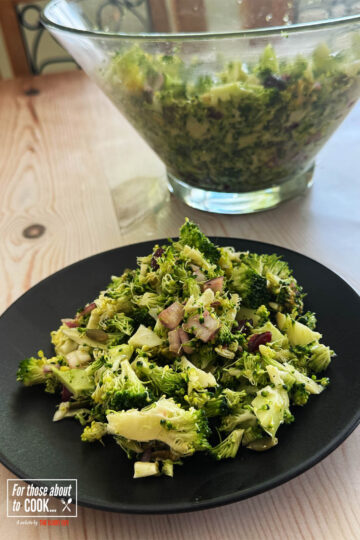
    • Broccoli Salad on a serving plate.
      Broccoli Salad
    • Chickpea & Carrot Salad
      Easy Chickpea and Carrot Salad
    See more Salads →

    Recipe

    Italian Gnocchi Recipe

    Italian Gnocchi Recipe

    Yield: 6-8
    Prep Time: 1 hour
    Cook Time: 50 minutes
    Total Time: 1 hour 50 minutes

    Master the Italian Gnocchi recipe with step-by-step tips for light, fluffy Gnocchi perfect for your favorite sauces.

    5.0 Stars (1 Review)

    Ingredients

    • 2lb (1kg) Russet (Idaho) potatoes (US) or Marris Piper potatoes (UK)
    • 1 12 cups (180g) 00 flour
    • 1 egg
    • pinch of salt

    Instructions

    1. Wash your potatoes under cold water to remove any dirt and grit.
    2. Boil a pan of water and add your potatoes. Boil for 40-50 minutes until a knife can easily poke into one.
    3. Drain the water and potatoes into a colander.
    4. Allow your potatoes to cool slightly, and when you are able to handle them, carefully peel the skins off.
    5. Using a potato ricer, mash your potatoes into a mixing bowl.
    6. Add your flour to a flat surface and create a well, add your riced potatoes on-top and again create a well. Finally, crack an egg in the middle and add a pinch of salt.
    7. Whisk the egg gently with a fork and carefully bring the dough together. If it is too wet, add more flour.
    8. Split the dough into four sections and roll each piece into a thin log (about ¾ of an inch thick). Cut into one inch pieces. then to shape, press your piece of gnocchi into a fork and roll along the prongs.
    9. To cook, bring a pan of water to the boil and as each piece rises to the top, remove them as and when with a slotted spoon. Add extra salt and pepper to taste and stir in some good quality olive oil.
    Nutrition Information:
    Yield: 8 Serving Size: 1
    Amount Per Serving: Calories: 712Total Fat: 2gSaturated Fat: 1gTrans Fat: 0gUnsaturated Fat: 1gCholesterol: 23mgSodium: 31mgCarbohydrates: 148gFiber: 6gSugar: 1gProtein: 21g
    © Joe
    Cuisine: Italian / Category: Italian

    Padron Peppers

    April 12, 2025 By Dan

    Serving the Padron peppers on a serving plate.

    Padrón peppers (also spelled Padron) are one of my favorite tapas when I visit Spain on our annual family break there. These small chili peppers are originally from the municipality of Padrón in Galicia but you will find them all over Spain now. Now you can bring a bit of Spain home and enjoy this easy and authentic recipe for Padron peppers that only takes minutes to prepare.

    Padron peppers on a plate next to a glass of beer.
    [feast_advanced_jump_to]

    What Are Padrón Peppers?

    Padrón peppers (Pimientos de Padrón) are small green chili peppers from the town of Padrón in Galicia, a region in northwestern Spain. These peppers have been cultivated by Franciscan monks since the 16th century, and today, they’re enjoyed not only in Galician but all over Spain.

    Padron peppers are usually about 2 to 4 inches in length and are bright green in color. They have a thin and wrinkled, skin that when fried develops a smoky, savory flavor that is mild in heat—most of the time.

    Which brings us to their most famous trait...

    The Pepper Roulette: Some Are Hot, Some Are Not

    Ask any Spanish foodie about Padrón peppers and they’ll smile knowingly before quoting the age-old Galician saying:
    "Os pementos de Padrón, uns pican e outros non."
    Translation: "Padrón peppers, some are hot and some are not."

    To be honest, I have yet to find one that makes my eyes water but the Spanish as a rule don't like spicy food like you find on my curry blog so I can understand the above Galacian saying. For many Spanish Padron pepper fans, the fun of eating them is that you never know what you're going to get.

    Most are mild, with a grassy, slightly nutty flavor. But about 1 in 10 packs a spicy surprise. It’s culinary Russian roulette—an edible game of chance that makes them a fun addition to any meal or gathering.

    So are Padron peppers spicy?

    Padron peppers have a Scoville rating of around 500-2500 SHU but the the odd one can be hotter. Generally speaking though, even if you don't like spicy peppers, chances are you are going to love digging into some of these.

    Are Padron peppers the same as Shishito Peppers?

    Padrón peppers are often confused with shishito peppers, a Japanese variety with a similar look and texture. Both peppers are typically mild and cooked in the same blistered style. However, there are subtle differences:

    • Shishitos are even milder than Padróns, with only about 1 in 20 being spicy.
    • Padróns have a slightly deeper, earthier flavor and a more unpredictable spice profile. You can expect 1 in 10 to have a bit more of a kick!

    If you like shishitos but want a bit more excitement (and heat), Padróns are your next step.

    Ingredients

    You only need three ingredients to make a delicious platter of Padron peppers: Padron peppers, extra virgin olive oil and flaky salt like Maldon.

    The ingredients for the recipe on a counter top.
    • Padron Peppers
    • Extra Virgin Olive Oil
    • Flaky Salt

    See recipe card for quantities.

    How to Cook Padrón Peppers

    One of the best things about Padrón peppers is how incredibly easy they are to prepare. You don’t need a complex recipe or a long list of ingredients. In fact, the classic Spanish preparation requires the three ingredients you see above.

    Step by step photos

    The process of making Padron peppers could not be easier as you will see from the photos below.

    Washing the Padron Peppers under water.
    1. Step 1: Wash the peppers thoroughly under cold water.
    Frying the Padron peppers in the olive oil.
    1. Step 2: Dry the peppers completely with a clean cloth. Then heat the oil in a pan over a medium-high heat until hot but not smoking. Add the peppers and cook for about 7 minutes or until blistering. Be sure to stir continuously for even cooking.
    Adding salt to the Padron peppers in the pan once they are cooked.
    1. Step 3: Once the peppers are blistered in places and just cooked though, season with the salt to taste.
    Serving the Padron peppers on a serving plate.
    1. Step 4: Transfer to a serving plate and dig in.

    Usefule Equipment

    A good frying pan or wok: All you need is a good pan to make Padron Peppers. I prefer to use a wok so that I can easily toss the peppers around as they cook.

    A spatula: You will need this to help tossing the peppers around in the pan so that they fry evenly.

    Storage

    You can store any leftovers, covered in the fridge for up to three days. To reheat, toss them back in the pan over a medium-high heat until heated through.

    Top Tip

    Don't be lazy! It's a quick and easy job. Be sure to really get in there as they fry with your spatula so that the fry and blister evenly.

    FAQ

    Do you need to remove the seeds before frying?

    Padrón peppers are cooked whole—seeds, stems, and all. Just wash them and pat them dry before cooking. The stems are useful as little “handles” when eating.

    What is the best way to cook Padron Peppers?

    The classic and traditional way just like in the recipe card below. You fry them for about 7 minutes or until they are soft and char and blister in places. Then you add the salt and serve hot.

    Do you need to prick Padron Peppers before frying?

    No need to prick! They rarely burst and even if they do, it's no big deal. Just make sure your pan is hot and don't overcrowd the pan

    Can you roast or air fry the peppers instead?

    Yes! Toss with olive oil, spread on a baking sheet, and roast at 425°F (220°C) for about 10–15 minutes, until blistered and slightly browned. Finish with sea salt.

    Can you freeze Padron peppers?

    Yes but it is best to freeze them raw. Wash and dry, then freeze in a single layer on a tray before transferring to a bag. Texture may soften a bit after thawing, but they’re still great for cooking.

    Pairing

    These Padron peppers will will go nicely with any of these:

    • Bowl of chicken and chorizo risotto garnished with parsley
      Chicken and Chorizo Risotto
    • homemade croque monsieur
      Croque Monsieur
    • smashed potatoes looking crispy on a tray
      Smashed Potatoes
    • cassoulet on a serving plate with crusty French bread and salad.
      Cassoulet
    • Homemade Tuscan chicken plated up
      Tuscan Chicken
    • Hungarian goulash over pasta.
      Hungarian Goulash
    • Homemade easy pesto pasta
      Easy Pesto Pasta

    Recipe

    Serving the Padron peppers on a serving plate.

    Padron Peppers

    Yield: 2 to 4
    Cook Time: 7 minutes
    Total Time: 7 minutes

    Padron peppers are a delicious tapa that you can literally prepare in about 10 minutes. They are great as a starter for Spanish or any Mediterranean main course dish.

    5.0 Stars (104 Reviews)

    Ingredients

    • ½ lb. Padron peppers
    • 4 tablespoon extra virgin olive oil
    • Flaky salt to taste

    Instructions

    1. Wash and pat dry the padron peppers. You want them to be dry when they hit the pan for better blistering.
    2. Heat the olive oil in a pan over a medium-high heat until it is hot but not smoking. If the oil begins to smoke, turn down the heat!
    3. Add the padron peppers in one layer. You might need to fry in batches depending on the size of your pan. Fry, stirring regularly for about 7 minutes or until the peppers are lightly charred and blistering in places.
    4. Season to taste with the flaky salt and pour it all onto a serving platter. Padron peppers are best served hot but I have been known to sneak a few, cold from the fridge.
    Nutrition Information:
    Yield: 4 Serving Size: 1
    Amount Per Serving: Calories: 135Total Fat: 14gSaturated Fat: 2gTrans Fat: 0gUnsaturated Fat: 11gCholesterol: 0mgSodium: 147mgCarbohydrates: 4gFiber: 1gSugar: 2gProtein: 1g
    © Dan
    Cuisine: Spanish / Category: European

    Big Mac Salad

    April 11, 2025 By Dan

    Big mac salad

    So easy to prepare... This Big Mac salad tastes just like a Big Mac but without the carbs. If you're gluten free or just cutting back on the carbs, you might like to try this new Big Mac salad recipe soon. It tastes just like a Big Mac!

    You can whip it up in no time. You might also like to try the original Big Mac recipe.

    Big mac salad

    About this recipe.

    This is essentially a Big Mac but without the buns. Well, almost. There is a lot more veg in the recipe to make it worthy of being called a salad.

    I have given the recipe to serve one to two people but I usually make a lot more. Although it is an alternative to a burger in a bun, you don't really need to think of it that way.

    Make this Big Mac salad whenever you want a good salad. Really, it's just another salad and when you prepare as many salads as I do, it's nice to have a few different recipes to stop them from getting boring.

    [feast_advanced_jump_to]

    Ingredients For Big Mac Salad

    Ingredients for big mac salad
    • Rapeseed (canola) oil
    • Minced (ground) beef
    • Onion
    • Iceberg lettuce
    • Cherry tomatoes or baby plum tomatoes
    • Yellow cheddar cheese
    • Red onion
    • Sesame seeds
    • Big mac sauce (recipe below)

    See recipe card for quantities.

    Step by step photographs...

    ground beef and onion in a pan for big mac salad
    1. Step 1: Fry the beef over a medium high heat. When half cooked, stir in the chopped onions.
    browned minced beef
    1. Step 2: Cook for about 5 minutes or until the beef is completely cooked. Take off the heat, cover and keep hot.
    Adding big mac sauce to the big mac salad
    1. Step 3: On a bed of shredded lettuce, arrange all the ingredients and then top with the Big Mac sauce. You can add as much sauce as you like. I'm usually pretty generous with the dressing.
    finished big mac salad
    1. Step 4: Enjoy!

    Hint: Go ahead and prepare your vegetables of choice and store them in the fridge so that they are nice and cold when you add them.

    The meat is best cooked right before adding it to the salad. That said, you could fry it up and store it in your fridge too. Then just heat it up in a pan or in your microwave. If that's more convenient for you, do it.

    The Big Mac sauce takes the most effort but it could not be easier. If you want to gather and whisk all the Big Mac sauce ingredients and place the sauce, covered tightly in your fridge. It lasts a long time just like the ingredients in it last a long time

    How do you make Big Mac Sauce?

    If The Big Mac sauce is the dressing for this salad. I have a detailed Big Mac sauce here with photos but you could simply whisk up the following ingredients. I use dill pickles which are difficult to find in the UK. If using sweet pickles, you can leave out the sugar or just add to taste at the end.

    Following are the ingredient as I normally prepare them. In the recipe card below, I have downscaled it so that there is enough for the Big Mac Salad. If you make this larger amount, it keeps in the fridge for weeks and is good to have on hand.

    • Sugar to taste, I leave it out
    • 1 cup mayonnaise
    • 4 tablespoon pickle relish
    • 2 tablespoon onion, minced
    • 1 tablespoon yellow mustard
    • 1 tablespoon white distilled vinegar
    • 1 teaspoon sweet or smoked paprika
    • ½ teaspoon garlic powder
    • ½ teaspoon onion powder
    • Salt to taste, I use about ½ tsp

    Top Tip

    Make this recipe your own...

    The ingredients I use in my recipe are all in a Big Mac except for the tomatoes and sliced onions. The cheese I use is different too as burger slices just aren't good in a salad.

    So I developed the recipe the way I like it. You could and should do the same. Add what you like. Add more vegetables. Make it with turkey instead of beef.

    You can really prepare your Big Mac salad as you want it to be.

    FAQ

    Is the Big Mac sauce exactly like that you find at McDonald's?

    Nope! It does taste a lot like it but the Big Mac sauce contains ingredients that are not easy to come by and not necessary for the home cook. Things like preservatives and stabilisers.
    Make my version of Big Mac Sauce here and you might be impressed at how close it tastes to the real thing.

    Burger Recipes

    Looking for other recipes like this? Try these:

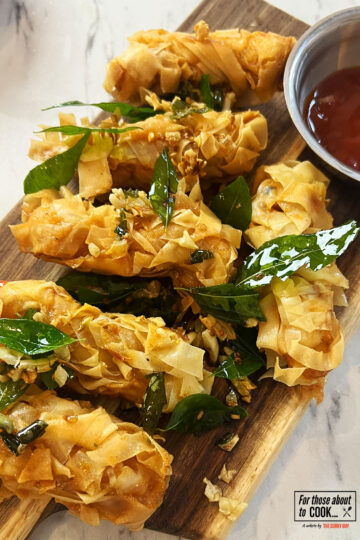
    • Crispy threaded chicken served on a board and topped with garlic and curry leaves
      Crispy Threaded Chicken - Pottitherichath
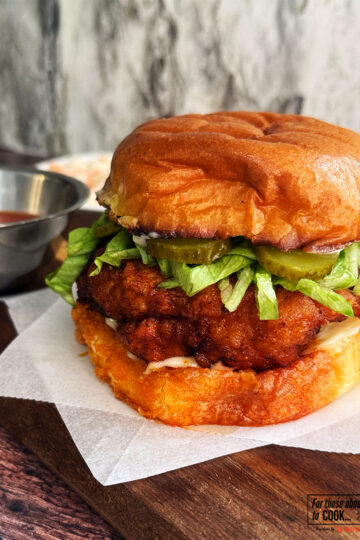
    • Nashville hot chicken burger served with hot sauce and topped with pickles and lettuce
      Nashville Hot Chicken Burger
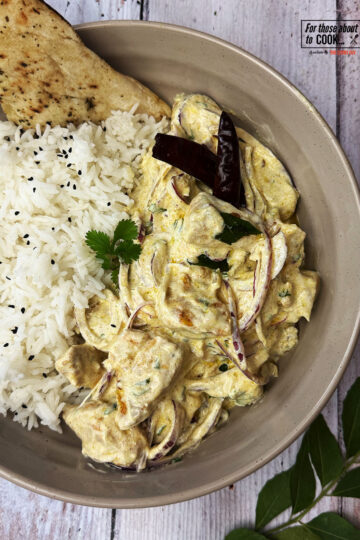
    • Chicken Chukauni served with rice and naan in a bowl
      Chicken Chukauni
    • Kerala tawa prawns on a bed of curry leaves
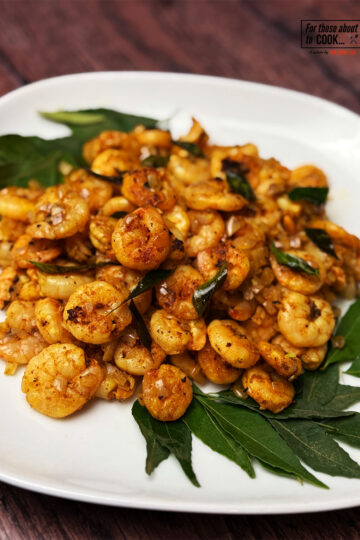
      Kerala Tawa Prawn Fry

    American Recipes

    These are my favorite American dishes:

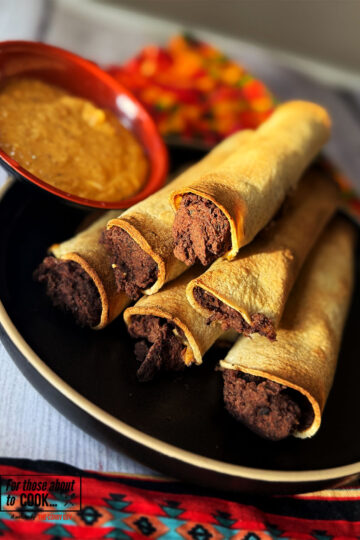
    • Refried bean taquitos served with chipotle dip
      Refried Bean Taquitos
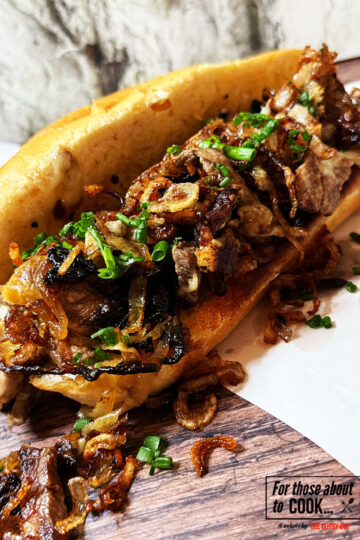
    • Philly Cheesesteak Recipe
      Philly Cheesesteak Recipe
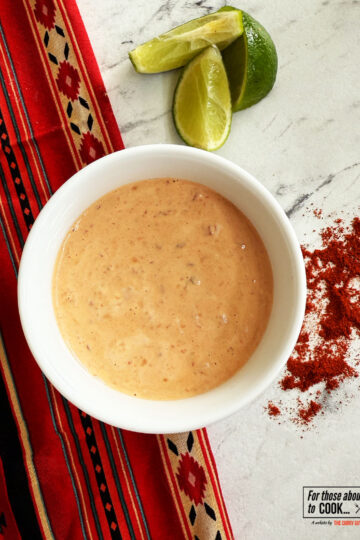
    • Chipotle mayo served in a bowl
      Chipotle Mayo
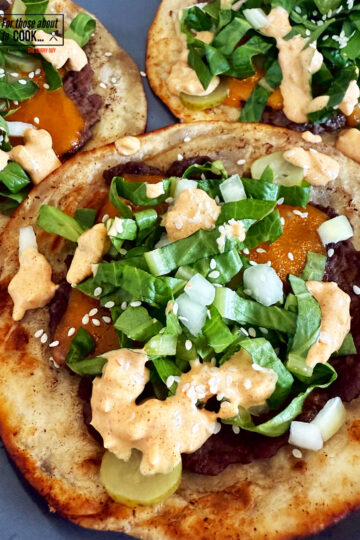
    • Cheeseburger tacos topped with big mac sauce
      Smash Burger Tacos
    See more American →

    Recipe

    Big mac salad

    Big Mac Salad

    Yield: 2
    Prep Time: 10 minutes
    Cook Time: 10 minutes
    Total Time: 20 minutes

    It's like a Big Mac but without the bun and all those carbs. Try this Big Mac salad soon. It's so good.

    3.1 Stars (195 Reviews)

    Ingredients

    • 1 tablespoon rapeseed (canola) oil
    • 14oz (400g) minced (ground) beef
    • ½ onion, finely chopped
    • ½ iceberg lettuce, shredded
    • 6 cherry tomatoes or baby plum tomatoes, halved or quartered
    • 1 cup (100) grated yellow cheddar cheese
    • ½ red onion, thinly sliced
    • 1 generous tablespoon sesame seeds
    • Big Mac Sauce (recipe in post)

    Instructions

    1. Prepare the Big Mac salad dressing first. Place all the ingredients for the Big Mac sauce in a bowl and whisk until smooth. Place, covered in the fridge until ready to use.
    2. Heat a pan over a medium high heat. Heat the oil and then add the minced (ground) beef. Break it apart as best you can with a spatula and then add the chopped onion.
    3. Fry until cooked through and season with a little salt and pepper to taste. Keep warm.
    4. To build the salad, take a couple of large iceberg lettuce leaves and place the in a salad bowl or on a deep plate.
    5. Spread the shredded lettuce on top and then arrange the cheese, sliced red onion, tomatoes and beef on top.
    6. Drizzle to taste with the Big mac sauce and garnish with the pickles and sesame seeds.
    Nutrition Information:
    Yield: 2 Serving Size: 1
    Amount Per Serving: Calories: 306Total Fat: 23gSaturated Fat: 10gTrans Fat: 0gUnsaturated Fat: 10gCholesterol: 53mgSodium: 446mgCarbohydrates: 13gFiber: 3gSugar: 7gProtein: 14g
    © Dan
    Cuisine: American / Category: Burger Recipes

    Strawberry Overnight Oats

    April 10, 2025 By Joe

    Strawberry Overnight oats

    This Strawberry Overnight Oats recipe could not be any easier. No cooking is required and you can whip up this super nutritious, protein filled breakfast in absolutely no time at all.

    Strawberry Overnight oats

    About this recipe

    Overnight oats are essentially oatmeal without needing to do any cooking at all. By soaking raw rolled oats in liquid overnight in your refrigerator, you will have delicious softened and creamy oats by the morning. No cooking needed! The fridge does all the work.

    You don't need many ingredients for this recipe and you can so easily adapt them to your liking. See how I make this version below as well as some popular variations.

    [feast_advanced_jump_to]

    Ingredients

    ingredients for strawberry overnight oats
    • Rolled oats
    • Chia seeds
    • Almond milk
    • Greek Yogurt
    • Honey
    • Strawberries

    See recipe card for quantities.

    Step by step photographs...

    This strawberry overnight oats recipe is a perfect make ahead of time breakfast. Here's how to make it. Feel free to switch up any of the ingredients so it's fit to your taste.

    mashing stawberries with a fork
    1. Step 1: Mash the strawberries on a plate with a fork until they reach your desired consistency. You can leave some chunks for texture or mash them completely smooth.
    Start to layer the ingredients in a jar/container, starting with the oats.
    1. Step 2: Start to layer the ingredients in a jar/container, starting with the oats.
    Add the chia seeds
    1. Step 3: Add the chia seeds
    adding the yogurt to the strawberry overnight oats
    1. Step 4: Now the yogurt and honey.
    Finally, add your strawberries
    1. Step 5: Finally, add your strawberries
    stirring the strawberry overnight oats together
    1. Step 6: Stir in the almond milk and mix everything thoroughly to ensure the chia seeds and oats are well mixed with the liquids.. Seal the container with a lid and refrigerate overnight (8-12 hours).

    Hint: Sweeten to taste. Add more or less honey, depending on your own sweet tooth.

    Variations

    There are plenty of variations for this strawberry overnight oats recipe. Here are some suggestions.

    • Add Banana - Add mashed or sliced banana with the strawberries
    • Strawberries and cream- Get the ultimate strawberries and cream flavour by adding a touch of vanilla extract with the yogurt.
    • Chocolate - add just a teaspoon of cocoa powder or chocolate protein powder
    • Strawberry shortcake - Layer some crushed digestive biscuits or granola at the bottom or on the top before serving.

    Equipment

    The best containers for this recipe are containers that have lids. Use a mason jar, glass meal prep containers or anything that has an airtight lid with clear sides. A spoon holder is always useful too!

    Storage

    Storing these overnight properly is important in the process of making these delicious strawberry overnight oats so make sure you follow each step carefully. These strawberry overnight oats will last in the ridge for up to 5 days

    You can also freeze overnight oats in an airtight container. Only freeze after they have refrigerated overnight and thaw no longer than 3 months. Allow to thaw in the fridge or microwave them directly from the freezer. Add extra almond milk if needed.

    Top Tip

    Make sure you give everything a good stir before placing in teh refrigerator. This will help evenly distribute the oats, liquid and any mix-ins so you don't end up with dry patches or clumps.

    FAQ

    Can I heat up overnight oats?

    Yes! While they are typically served cold with no cooking needed, you can pop them in the microwave before serving for 30-60 seconds.

    Can i make them with water instead of milk?

    Yes although they will be less creamy. Consider mixing in nut butter or banana for creaminess.

    Recent recipes

    • Chicken Achaar finished in the pan
      Chicken Achaar
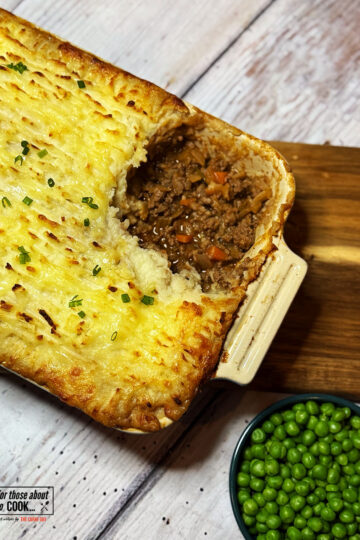
    • Cottage pie served with garden peas
      Cottage Pie Recipe
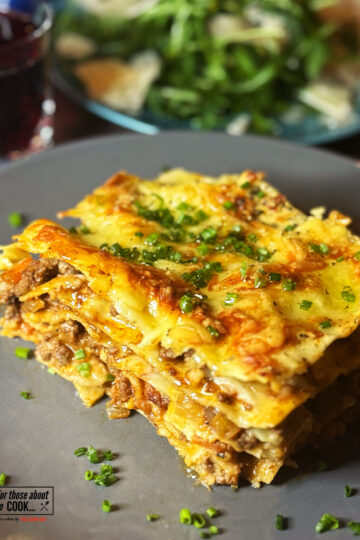
    • Lasagne served on a plate with rocket salad
      Lasagne
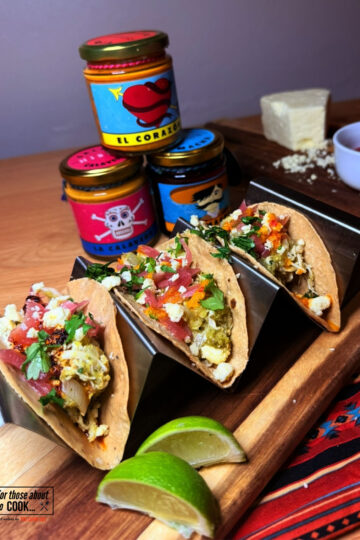
    • Salsa verde tacos topped with salsa and cheese
      Salsa Verde Tacos

    Enjoy high protein recipes? Try this Ribeye Steak recipe for dinner tonight!

    Recipe

    Strawberry Overnight oats

    Strawberry Overnight Oats

    Yield: 2
    Prep Time: 5 minutes
    Additional Time: 8 hours
    Total Time: 5 minutes

    Strawberry Overnight Oats recipe could not be any easier. No cooking is required and you can whip up this super nutritious, protein filled breakfast in absolutely no time at all.

    5.0 Stars (1 Review)

    Ingredients

    • 2 cups (180g) rolled oats
    • 2 tablespoon chia seeds
    • 2 cups (480ml) almond milk
    • ½ cup (115g) Greek yogurt
    • 2 tablespoon honey
    • 8 strawberries

    Instructions

    1. Mash the strawberries on a plate with a fork until they reach your desired consistency. You Can leave some chunks for texture or mash them completely smooth.
    2. Next, you are going to layer the ingredients in a jar or container with a lid, combine the oats, chia seeds, honey, yoghurt, mashed strawberries and almond milk.
    3. It is important to stir everything thoroughly to ensure the chia seeds and oats are mixed well with the liquids.
    4. Seal the container with an airtight lid and refrigerate overnight (8-12 hours). This allows the oats and chia seeds to absorb the liquid and soften.
    5. If the oats have thickened too much, you can add a splash more almond milk to reach your desired consistency. Enjoy!
    Nutrition Information:
    Yield: 2 Serving Size: 1
    Amount Per Serving: Calories: 447Total Fat: 12gSaturated Fat: 4gTrans Fat: 0gUnsaturated Fat: 7gCholesterol: 22mgSodium: 150mgCarbohydrates: 70gFiber: 10gSugar: 37gProtein: 18g
    Cuisine: British/American/European / Category: Breakfast

    Easy Pesto Pasta

    April 9, 2025 By Joe

    Homemade easy pesto pasta

    This easy pesto pasta recipe will become a weeknight favourite. Ready in under 30 minutes, using only the freshest ingredients you can access pretty much everywhere. Skip the jars and make it fresh!

    You can absolutely serve this cold too. A perfect treat for lunch time at work!

    Homemade easy pesto pasta

    About this recipe

    Basil pesto is a classic, popular Italian sauce, which is incredibly versatile. In this recipe. I show you how to make a fresh basil pesto and mix it into a delicious pasta dish with added cream. Once you see how easy it is to make this easy pesto pasta, It will become a favourite in your home.

    [feast_advanced_jump_to]

    Step by step photographs

    You shouldn't have a problem sourcing any ingredients for this easy pesto pasta recipe. All ingredients can be purchased at your nearest grocery store.

    Ingredients for homemade pesto pasta
    • Basil
    • Pine nuts
    • Garlic
    • parmesan
    • olive oil
    • salt & pepper
    • double cream (not in photograph)
    • pasta

    See recipe card for quantities.

    Instructions

    pine nuts and garlic in the food processor 
for easy pesto pasta
    1. Step 1: Start by adding the pine nuts and garlic to the food processor.
    Fresh basil added to teh food processor
    1. Step 2: Then add the basil on top.
    oil, parmesan, salt and pepper added to the easy pesto pasta recipe
    1. Step 3: Now add the grated Parmesan, salt, pepper and olive oil. pulse in short bursts to maintain a good texture and avoid over blending.
    pasta cooking in a pan
    1. Step 4: Bring a pan of water to the boil and add your pasta. Cook as per the packaging instructions.
    Draining the pasta
    1. Step 3: Drain the pasta and set aside.
    cream and basil pesto added to the pan
    1. Step 4: In the same pan, add the pesto and the cream, stir together.
    adding the pasta to the pan for the easy pesto pasta recipe
    1. Step 3: Add the pasta to the pan and mix together well so that the pasta is well coated in sauce.
    Served up easy pesto pasta
    1. Step 4: Serve hot or cold with added pine nuts.

    Hint: If you’re not serving immediately, keep the pesto, cream and pasta separate until ready to serve. This will help prevent the pasta from soaking up the sauce and drying out. Make sure you add a touch of olive oil to your pasta to avoid it sticking together.

    Serving suggestion

    Make this dish a meal by adding a prepared salad to the table. I absolutely love this Green Goddess Salad but check out these other salad recipes too.

    Substitutions For Easy Pesto Pasta

    This easy pesto pasta recipe is easy to substitute ingredients to suit many dietary requirements.

    • Nuts - You can skip them or add toasted breadcrumbs for added texture.
    • Cheese - You can add a spoonful of nutritional yeast instead or even a little extra salt and some lemon juice.
    • Pasta - Use any pasta you like in this recipe or try gnocchi, noodle noodles or you can even try cooked potatoes or rice.
    • Cream - You can skip cream altogether or even add coconut milk for a twist.

    Variations of Easy Pesto Pasta

    Once that you have mastered the basil pesto recipe, you might want to switch it up. This Easy Pesto Pasta recipe is easily adapted and here are some ideas of variations you could try.

    • Spinach & Basil - If you prefer a milder and sweeter taste, swap half of the basil for spinach. It is a a great way to use up leftover greens in your refrigerator.
    • Red pesto - Switch out most of the basil for sun-dried tomatoes and create a red pesto. It's delicious served creamy and stirred into a pasta.

    There are so many other things you can do with basil pesto, instead of adding it to pasta. Check out my Basil Pesto recipe where you can see example of how else to use basil pesto.

    Equipment

    For the best results, use a food processor as this allows you to pulse it in short bursts to maintin a good texture and avoid over-blending. However you can use a regular blender to create the paste.

    Storage

    If possible, store the pesto, cream and pasta separately, adding a touch of oil to the pasta to avoid it sticking. This will stop the pasta from absorbing the sauce and drying it out. You should also add a tablespoon of olive oil to the top of the pesto to stop it going brown, When ready to heat back up, heat the pesto in a pan over a medium heat, stir in the cream and add your pasta.

    If it is already mixed together, simply place it in a bowl, covered and it will last in the refrigerator for up to 5 days.

    The pesto freezes really well, so as long as this is seperate to the cream and the pasta, it will freeze for up to 3 months. It is definitely worth making a big batch so you can do this.

    Top Tip

    Use the best basil you can find, a good quality cheese and a proper extra virgin olive oil. You will taste the difference!

    FAQ

    How do I keep my pesto from going brown in the fridge?

    Add a thin layer of olive oil on the top of your pesto to avoid oxidation. Store in an airtight container. This will help maintain its vibrant green color.

    Can I cook this in advance?

    Yes absolutely!. I recommend that you don't mix the ingredients together until you are ready to serve. This means, you can easily prepare the pesto and pasta and mix together along with the cream when you're ready to serve. Store the pasta with a touch of olive oil to avoid it sticking together. If serving hot, heat the pesto in a pan over a medium heat, stir in the cream and add your pasta. stir continuously until it's hot enough to serve.

    More Italian Recipes

    Looking for other recipes like this? Try these:

    • Finished Italian chicken in a bowl with garlic bread
      Italian Chicken (Pollo allo Scarpariello)
    • Veal Scallopini served in the pan it was cooked in.
      Veal Scallopini
    • Finished chicken fettuccini Alfredo
      Chicken Fettuccini Alfredo
    • Finished gnocchi with sausage recipe
      Gnocchi and sausage recipe

    Pairing

    These are my favorite dishes to serve with [this recipe]:

    • Curried brussels sprouts served in a side dish
      Curried Brussels Sprouts
    • Honey harissa chicken served on a bed of mashed potato with harissa chicken gravy
      Honey Harissa Chicken
    • Chipotle chicken taquitos served with chipotle dip
      Chipotle Chicken Taquitos
    • Spicy beef taquitos served with guacamole
      Spicy Beef Taquitos

    Recipe

    tomato and mascarpone pasta

    Tomato and Mascarpone

    Yield: 4
    Prep Time: 10 minutes
    Cook Time: 10 minutes
    Additional Time: 5 minutes
    Total Time: 25 minutes

    Discover the easy and delicious Tomato and Mascarpone pasta recipe that is ready in under 30 minutes for a perfect weeknight meal.

    5.0 Stars (104 Reviews)

    Ingredients

    • 4 cups of pasta (your choice)
    • ⅔ cup (150g) Mascarpone
    • 1 cup (250ml) passata
    • small handful of fresh basil leaves
    • ¾ cup (60g) grated parmesan
    • 4 garlic cloves (peeled and crushed)
    • 4 tablespoon olive oil
    • Salt & pepper to taste

    Instructions

    1. Bring a pan of water to the boil and add your pasta. Cook as per the packaging instructions
    2. Meanwhile, In a food processor (or blender), add the mascarpone, olive oil, garlic, basil, parmesan and salt & pepper.
    3. Stir in the tomato passata.
    4. Once your pasta is cooked, stir in the sauce to your hot pasta. If you're working ahead and already have cooked pasta that is no longer hot, heat the sauce over a low-medium heat first. Top with parmesan. Enjoy!
    Nutrition Information:
    Yield: 4 Serving Size: 1
    Amount Per Serving: Calories: 321Total Fat: 15gSaturated Fat: 2gTrans Fat: 0gUnsaturated Fat: 12gCholesterol: 1mgSodium: 93mgCarbohydrates: 39gFiber: 2gSugar: 1gProtein: 8g
    © Joe
    Cuisine: Italian / Category: 30 Minute Or Less

    Green Goddess Salad

    March 26, 2025 By Dan

    Green goddess salad served on a chilled plate next to a salad bowl.

    Once you make a homemade green goddess dressing, you might like to try it tossed into a green goddess salad. Here I will show you how I put mine together but there are of course many different options.

    Green goddess salad served on a chilled plate next to a salad bowl.

    About this recipe.

    There are many different recipes for green goddess salad. I have yet to find a bad one. The salad has bold flavors and it really is a good addition to any meal.

    This is a recipe that I have been making since I was a kid. The green goddess dressing is a recipe from our family cookbook and in my personal and perhaps biassed opinion, it is the best!

    [feast_advanced_jump_to]

    Ingredients

    There aren't a lot of ingredients for this one. You can use the salad ingredients of your choice. Just be sure to use the freshest vegetables you can get your hands on.

    Ingredients for the salad.
    • baby gem lettuce
    • lardons
    • carrot
    • red onion
    • cucumber
    • radishes
    • red bell pepper
    • green goddess dressing
    • Salt and pepper

    See recipe card for quantities.

    Ingredients

    Use a clear shot of the ingredients for this recipe, prepped, and labeled if necessary. Add a paragraph of content describing why these ingredients were chosen. Insert the ingredients into the list below, omitting quantities.

    Ingredients for the salad.
    • baby gem lettuce
    • lardons
    • carrot
    • red onion
    • cucumber
    • radishes
    • red bell pepper
    • green goddess dressing
    • Salt and pepper

    See recipe card for quantities.

    Step by step photographs.

    You can literally make this salad in about 15 minutes including the time it takes to make the dressing!

    Frying the lardon until browned and crispy.
    1. Step 1: Combine all spices into a large bowl and combine thoroughly with mixture
    All of the salad ingredients minus the dressing in a large salad bowl.
    1. Step 2: Form into ball shape with your hands
    Tossing the dressing into the green goddess salad in a wooden salad bowl.
    1. Step 3: Press into patties
    Serving the green goddess salad on a plate with the salad bowl in the background.
    1. Step 4: Cook in oven for x minutes at 400 degrees

    Substitutions

    You can and should have a play with the ingredients so that you use the freshest ingredients you can get your hands on. It is also ok to substitute other ingredients as listed below.

    • Lettuce: instead of baby gem lettuce, you can use romaine or cos lettuce or another hearty lettuce. As the dressing is quite thick, more delicate lettuce won't work as well.
    • Lardons: - You could use bacon instead of lardons. Just chop it up nicely.
    • Vegetarian/Vegan: Consider adding capers instead of the anchovies. If you are vegan, you could use a vegan mayonnaise or yoghurt in the dressing.

    Equipment

    A large mixing bowl: Use a large mixing bowl or salad bowl for tossing the salad together. Depending on the size of your salad bowl, it might be easier to toss the salad in a large mixing bowl before transferring it to your salad bowl.

    A wooden salad bowl: It just looks good and is great for presentation.

    A grater and sharp chefs knife: For preparing the vegetables.

    Storage

    You can store the green goddess dressing in the fridge for about 5 days. I don't recommend storing the salad once the dressing has been added.

    Top Tip

    Whenever I make a nice salad, it's not just about the salad! Consider chilling your plates and forks in the freezer for about an hour before serving. The cold plate and fork takes the salad up a level or two.

    FAQ

    Can you make Green Goddess salad without mayonnaise?

    Yes. The green goddess dressing I use includes mayonnaise but you can substitute Greek yoghurt for a healthier version.

    Can you use dried herbs instead of fresh?

    Although theoretically you could, you won't achieve that beautiful green colour that green goddess dressing is famous for. If you do need to use dried herbs, try using one teaspoon of dried for every 2 tablespoons of fresh.

    Is Green Goddess dressing suitable for vegans?

    The traditional recipe for the dressing includes mayonnaise and anchovies. Sometimes, as in this recipe it also calls for sour cream and cheese. You could make this vegan by substituting a vegan mayonnaise for the mayonnaise and sour cream and adding capers instead of the anchovies.

    Related

    Looking for other salad ideas? Here you go…

    • Caesar Salad
      The Best Caesar Salad Recipe
    • Salad Caprese
      Caprese Salad Recipe
    • Broccoli Salad on a serving plate.
      Broccoli Salad
    • Salad Nicoise
      Salad Nicoise With Creamy Vinaigrette Dressing

    Pairing

    This green goddess salad is amazing on its own or served with any of the below.

    • Finished asparagus risotto
      Asparagus Risotto
    • Hungarian goulash over pasta.
      Hungarian Goulash
    • homemade croque monsieur
      Croque Monsieur
    • Homemade Tuscan chicken plated up
      Tuscan Chicken
    • cassoulet on a serving plate with crusty French bread and salad.
      Cassoulet
    • Serving the steak and ale pie.
      Steak and Ale Pie
    • Finished pasta bake
      Salmon and Broccoli Pasta Bake
    • Penne alla Puttanesca
      Penne Pasta Recipe - Penne alla Puttanesca

    Recipe

    Tossing the dressing into the green goddess salad in a wooden salad bowl.

    Green Goddess Salad

    Yield: 4 to 6
    Prep Time: 10 minutes
    Total Time: 10 minutes

    You can build your green goddess salad using your vegetables and lettuce of choice. This recipe shows how I make mine but feel free to experiment and add other ingredients. The amount of dressing you use is down to personal preference.

    No Ratings

    Ingredients

    • 4 baby gem heads of lettuce
    • 100g (3.5oz) lardons
    • 1 carrot, grated
    • 1 medium red onion, thinly sliced
    • ½ cucumber, thinly sliced
    • 7 radishes, thinly sliced
    • 1 red bell pepper, thinly sliced
    • ½ batch green goddess dressing
    • Salt and pepper to taste

    Instructions

    1. Tear the baby gem into small pieces to your preferrence. Set aside.
    2. In a frying pan, fry the lardons for about 5 minutes or until crispy. Set aside to cool.
    3. To make the salad, place all of the ingredients except for the salt and pepper in a large salad bowl and toss until the dressing is coating all the vegetables. You can use more or less dressing to preference.
    4. Season with salt and freshly ground pepper to serve.
    Nutrition Information:
    Yield: 4 Serving Size: 1
    Amount Per Serving: Calories: 118Total Fat: 7gSaturated Fat: 1gTrans Fat: 0gUnsaturated Fat: 5gCholesterol: 6mgSodium: 228mgCarbohydrates: 13gFiber: 5gSugar: 6gProtein: 3g
    © Dan
    Cuisine: American / Category: Salads
    • « Previous Page
    • 1
    • …
    • 10
    • 11
    • 12
    • 13
    • 14
    • …
    • 25
    • Next Page »
    For Those About To Cook

    Welcome To For Those About To Cook

    We're a family-run food blog sharing brand-new recipes every week. From easy weeknight staples to indulgent weekend favorites. We're a team of five: Dan (The Curry Guy), Caroline, Joe, Shannon, and Jennifer, bringing you a wide variety of dishes inspired by Europe, the Mediterranean, the Americas, and more.

    This site focuses on Western-inspired recipes, while Eastern flavors are covered in depth over at greatcurryrecipes.net Between the two, you'll find everything you need to cook up something amazing so don't forget to subscribe!

    Subscribe

    Footer

    Contact Privacy Policy

    Subscribe for weekly updates!

    Subscribe
    ↑ back to top

    Copyright © 2024 For Those About to Cook